

As a supplier of molybdenum boats, I often encounter inquiries from customers regarding the suitability of molybdenum boats in corrosive gas environments. This is a crucial question, as the performance of molybdenum boats in such conditions can significantly impact various industrial applications. In this blog post, I will delve into the properties of molybdenum, the nature of corrosive gases, and analyze whether molybdenum boats can be used in a corrosive gas environment.
Properties of Molybdenum
Molybdenum is a refractory metal with several outstanding properties that make it highly desirable in many industrial applications. It has a high melting point of 2,623 °C (4,753 °F), which allows it to withstand extremely high temperatures without deforming or melting. This property is particularly useful in high - temperature processes such as vacuum furnaces and metal smelting.
In addition to its high melting point, molybdenum also has good thermal conductivity. This means that it can efficiently transfer heat, which is beneficial in applications where heat management is crucial. Molybdenum also exhibits excellent mechanical strength at elevated temperatures, maintaining its structural integrity under high - stress conditions.
However, when it comes to corrosion resistance, the situation is more complex. Molybdenum has a certain degree of resistance to corrosion in some environments, but its performance varies depending on the type of corrosive agent.
Types of Corrosive Gases
Corrosive gases can be classified into different types based on their chemical properties. Some common corrosive gases include sulfur dioxide (SO₂), hydrogen sulfide (H₂S), chlorine (Cl₂), and nitrogen oxides (NOₓ). Each of these gases reacts with metals in different ways, and the corrosion mechanisms can be influenced by factors such as temperature, gas concentration, and the presence of moisture.
Sulfur dioxide is a common industrial pollutant that can react with water in the air to form sulfurous acid (H₂SO₃). This acid can then react with metals, including molybdenum, causing corrosion. Hydrogen sulfide is another highly corrosive gas that can react with metals to form metal sulfides. Chlorine is a strong oxidizing agent that can react with metals to form metal chlorides, often resulting in rapid and severe corrosion. Nitrogen oxides can also react with metals in the presence of moisture, leading to the formation of nitric acid and subsequent corrosion.
Molybdenum Boats in Corrosive Gas Environments
The performance of molybdenum boats in corrosive gas environments depends on several factors.
Temperature
Temperature plays a crucial role in the corrosion process. At lower temperatures, molybdenum may have better resistance to some corrosive gases. For example, in the presence of sulfur dioxide at room temperature, molybdenum may show relatively slow corrosion rates. However, as the temperature increases, the reaction kinetics between the gas and molybdenum accelerate, leading to more rapid corrosion.

Gas Concentration
The concentration of the corrosive gas also affects the corrosion rate. Higher gas concentrations generally result in faster corrosion. For instance, in an environment with a high concentration of chlorine gas, molybdenum boats may experience severe corrosion within a short period.
Duration of Exposure
The longer the molybdenum boat is exposed to the corrosive gas, the more severe the corrosion is likely to be. Even if the corrosion rate is relatively slow initially, continuous exposure can lead to significant damage over time.
Presence of Moisture
Moisture can significantly enhance the corrosion process. Many corrosive gases react with water to form acids or other corrosive substances. For example, the presence of moisture can accelerate the corrosion of molybdenum in a sulfur dioxide - containing environment by facilitating the formation of sulfurous acid.
Case Studies and Experimental Results
Some studies have been conducted to evaluate the performance of molybdenum in corrosive gas environments. In a laboratory experiment, molybdenum samples were exposed to a mixture of sulfur dioxide and oxygen at different temperatures. The results showed that at lower temperatures (below 200 °C), the corrosion rate was relatively low, but as the temperature increased to 400 °C, the corrosion rate increased significantly.
Another study investigated the corrosion of molybdenum in a hydrogen sulfide environment. It was found that the corrosion rate increased with increasing hydrogen sulfide concentration and temperature. The formation of molybdenum sulfide on the surface of the molybdenum sample was observed, which led to a decrease in the mechanical properties of the material.
Mitigation Strategies
If you need to use molybdenum boats in a corrosive gas environment, there are several strategies that can be employed to mitigate corrosion.
Coating
Applying a protective coating to the surface of the molybdenum boat can enhance its corrosion resistance. Coatings such as ceramic coatings or noble metal coatings can act as a barrier between the molybdenum and the corrosive gas, reducing the direct contact and thus slowing down the corrosion process.
Environment Control
Controlling the environment can also help reduce corrosion. For example, reducing the temperature, gas concentration, and moisture content in the working environment can all contribute to reducing the corrosion rate of molybdenum boats. This may involve using ventilation systems to remove corrosive gases or dehumidifiers to control the moisture level.
Regular Inspection and Maintenance
Regular inspection of molybdenum boats can help detect early signs of corrosion. If corrosion is detected, appropriate maintenance measures can be taken, such as cleaning the surface or replacing damaged parts.
Applications of Molybdenum Boats in Corrosive - Prone Environments
Despite the challenges of corrosion, molybdenum boats are still used in some applications where corrosive gases are present. In the semiconductor industry, for example, molybdenum boats are used in some high - temperature processes where small amounts of corrosive gases may be present. The high melting point and excellent thermal conductivity of molybdenum make it a suitable material for these applications, and with proper mitigation strategies, the corrosion problem can be managed.
In addition to semiconductor manufacturing, molybdenum boats are also used in some chemical vapor deposition (CVD) processes. In CVD, corrosive gases are often used as precursors, and molybdenum boats can be used as substrates or reaction vessels. Again, by implementing appropriate corrosion - prevention measures, molybdenum boats can perform effectively in these environments.
Related Molybdenum Products
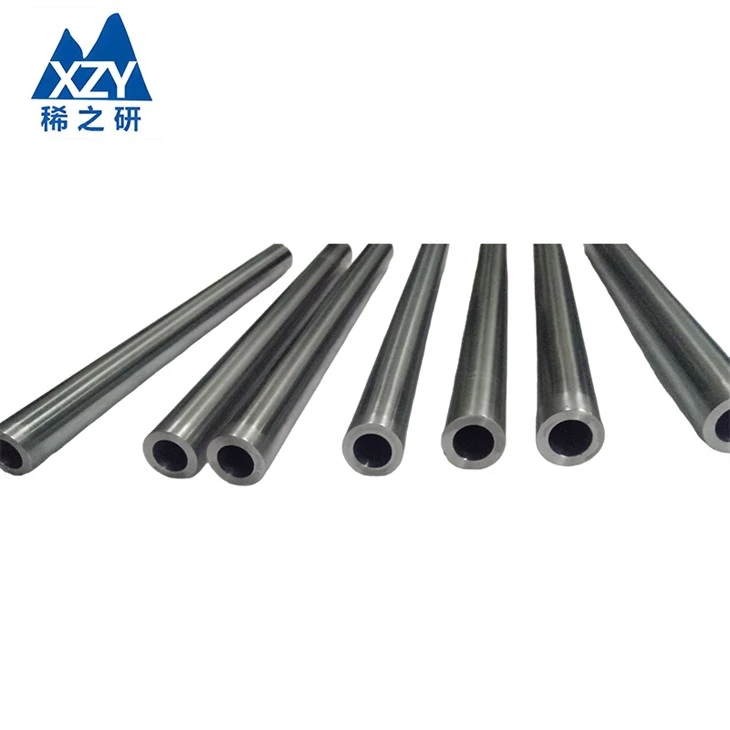
In addition to molybdenum boats, we also offer a range of other molybdenum products, such as Molybdenum Hot Zone, Pure Molybdenum Tube, and Pure Molybdenum Rod. These products also have their own unique properties and applications, and they can be used in combination with molybdenum boats in various industrial processes.
Conclusion
In conclusion, whether a molybdenum boat can be used in a corrosive gas environment depends on a variety of factors. While molybdenum has some desirable properties such as high melting point and good mechanical strength, its corrosion resistance in corrosive gas environments is not absolute. The type of corrosive gas, temperature, gas concentration, duration of exposure, and presence of moisture all play important roles in determining the corrosion rate.
However, with appropriate mitigation strategies such as coating, environment control, and regular inspection and maintenance, molybdenum boats can be used effectively in some corrosive - gas - containing environments. If you are considering using molybdenum boats in such an environment, it is important to carefully evaluate the specific conditions and consult with experts to ensure the best performance.
If you are interested in our molybdenum boats or other molybdenum products, please feel free to contact us for more information and to discuss your specific requirements. We are committed to providing high - quality products and professional technical support to meet your industrial needs.
References
- Jones, D. A. (1992). Principles and Prevention of Corrosion. Prentice Hall.
- Uhlig, H. H., & Revie, R. W. (1985). Corrosion and Corrosion Control: An Introduction to Corrosion Science and Engineering. Wiley.
- ASM Handbook, Volume 13A: Corrosion: Fundamentals, Testing, and Protection. ASM International.


