

Tungsten, known for its exceptional properties such as high melting point, density, and hardness, has found a wide range of applications in various industries. As a supplier of tungsten bars, I often receive inquiries about the machinability of these products. In this blog post, I will delve into the question: Can a tungsten bar be easily machined?
Understanding Tungsten's Properties
Before discussing the machinability of tungsten bars, it's essential to understand the key properties of tungsten. Tungsten has the highest melting point of all metals, at approximately 3,422°C (6,192°F). This high melting point is a result of the strong metallic bonds between tungsten atoms. Additionally, tungsten is extremely dense, with a density of 19.25 g/cm³, which is about 1.7 times that of lead. Its hardness is also notable, ranking around 7.5 on the Mohs scale.
These properties make tungsten an ideal material for applications that require resistance to high temperatures, wear, and corrosion. For example, tungsten is commonly used in the aerospace industry for components such as turbine blades and rocket nozzles, where it can withstand extreme heat and mechanical stress. In the electronics industry, tungsten is used in the production of filaments for incandescent light bulbs and as a material for electrical contacts due to its excellent electrical conductivity.
Challenges in Machining Tungsten Bars
The very properties that make tungsten so valuable also present significant challenges when it comes to machining. The high hardness of tungsten means that it can quickly wear down cutting tools. Traditional machining methods that work well with softer metals, such as aluminum or steel, are often ineffective or inefficient when applied to tungsten.
One of the main issues in machining tungsten is the generation of heat. During the machining process, the friction between the cutting tool and the tungsten bar can cause the temperature to rise rapidly. Given tungsten's high melting point, the heat generated may not be sufficient to melt the material, but it can still cause the cutting tool to overheat and wear out quickly. This not only increases the cost of machining due to frequent tool replacement but also affects the quality of the machined surface.
Another challenge is the brittleness of tungsten. While tungsten is hard, it is also relatively brittle, especially at lower temperatures. This means that during machining, there is a risk of cracking or chipping the material, particularly when applying high cutting forces or using inappropriate machining techniques.
Machining Techniques for Tungsten Bars
Despite the challenges, it is possible to machine tungsten bars with the right techniques and tools. Here are some of the commonly used methods:
Grinding
Grinding is one of the most effective methods for machining tungsten bars. It involves using a grinding wheel to remove material from the surface of the bar. Grinding wheels are typically made of abrasive materials such as diamond or cubic boron nitride (CBN), which are hard enough to cut through tungsten. The advantage of grinding is that it can produce a smooth surface finish and precise dimensions. However, grinding can be a slow and expensive process, especially for large-scale production.
Electrical Discharge Machining (EDM)
EDM is a non-traditional machining method that uses electrical discharges to remove material from the workpiece. In EDM, a pulsed electrical current is passed between an electrode and the tungsten bar, creating a series of electrical sparks. These sparks melt and vaporize the material, allowing it to be removed. EDM is particularly suitable for machining complex shapes and hard materials like tungsten. It can achieve high precision and does not require direct contact between the cutting tool and the workpiece, reducing the risk of tool wear and material damage.
Chemical Machining
Chemical machining, also known as chemical etching, involves using a chemical solution to dissolve the material from the surface of the tungsten bar. This method is often used for producing intricate patterns or thin-walled components. Chemical machining is a relatively gentle process that does not generate high levels of heat or mechanical stress, reducing the risk of cracking or chipping. However, it requires careful control of the chemical solution and the etching process to ensure accurate dimensions and a smooth surface finish.
Factors Affecting Machinability
Several factors can affect the machinability of tungsten bars. These include:
Tungsten Purity
The purity of the tungsten bar can have a significant impact on its machinability. Higher purity tungsten tends to be more homogeneous and less prone to defects, which can make it easier to machine. Impurities in the tungsten can cause variations in hardness and brittleness, leading to uneven machining and increased tool wear.
Heat Treatment
Heat treatment can be used to modify the properties of tungsten bars and improve their machinability. For example, annealing can reduce the hardness and brittleness of tungsten, making it easier to cut. However, heat treatment must be carefully controlled to avoid introducing new defects or altering the material's properties in an undesirable way.
Cutting Tool Selection
The choice of cutting tool is crucial for successful machining of tungsten bars. As mentioned earlier, diamond and CBN are the most commonly used materials for cutting tools due to their high hardness and wear resistance. The geometry of the cutting tool also plays an important role. Tools with sharp edges and appropriate rake angles can reduce cutting forces and improve the efficiency of the machining process.
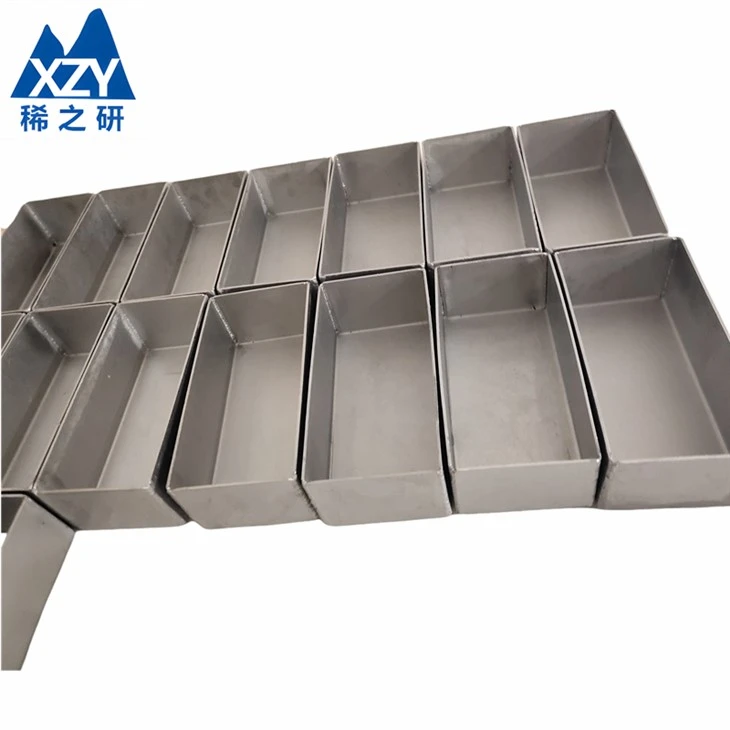

Our Tungsten Bar Products and Machining Services
As a supplier of tungsten bars, we understand the challenges associated with machining this material. That's why we offer a range of high-quality tungsten bars with different purities and dimensions to meet the diverse needs of our customers. In addition to providing raw materials, we also offer machining services using advanced techniques and state-of-the-art equipment.
Our team of experienced engineers and technicians is well-versed in the intricacies of machining tungsten. We can work closely with our customers to understand their specific requirements and develop customized machining solutions. Whether you need a simple cylindrical shape or a complex component with intricate features, we have the expertise and capabilities to deliver high-quality products.
In addition to tungsten bars, we also supply other tungsten products such as Tungsten Evaporation Boat, Pure Tungsten Tube, and Tungsten Balance Weight. These products are also subject to strict quality control measures to ensure they meet the highest standards.
Conclusion
In conclusion, while machining tungsten bars is not an easy task due to the material's high hardness, brittleness, and other challenging properties, it is definitely achievable with the right techniques, tools, and expertise. At our company, we are committed to providing our customers with high-quality tungsten bars and reliable machining services. If you have any questions or need further information about our products or services, please feel free to contact us. We look forward to discussing your specific requirements and working with you to find the best solutions for your applications.
References
- ASM Handbook Committee. (2000). ASM Handbook Volume 6: Welding, Brazing, and Soldering. ASM International.
- Kalpakjian, S., & Schmid, S. R. (2010). Manufacturing Engineering and Technology. Pearson Prentice Hall.
- Schey, J. A. (2000). Introduction to Manufacturing Processes. McGraw-Hill.
