

As a supplier of molybdenum bars, I often encounter inquiries from customers regarding the weldability of molybdenum bars. This topic is of great significance as it directly impacts the application and processing of molybdenum bars in various industries. In this blog, I will delve into the question of whether molybdenum bars can be welded, exploring the factors involved, the welding methods, and the precautions to be taken.
Properties of Molybdenum Bars Affecting Weldability
Molybdenum is a refractory metal with unique physical and chemical properties. It has a high melting point of approximately 2623°C, excellent high - temperature strength, and good corrosion resistance. However, these very properties also pose challenges when it comes to welding.
One of the main issues is the high melting point. Welding molybdenum requires a heat source capable of reaching extremely high temperatures. Additionally, molybdenum is prone to oxidation at elevated temperatures. When exposed to air during the welding process, a layer of molybdenum oxide can form on the surface, which can affect the quality of the weld joint. The oxide layer may cause porosity, cracking, and reduced mechanical properties of the weld.
Another factor is the high thermal conductivity of molybdenum. During welding, heat dissipates quickly, making it difficult to maintain a stable welding temperature. This can lead to incomplete fusion and uneven welds.
Welding Methods for Molybdenum Bars
Tungsten Inert Gas (TIG) Welding
TIG welding is a commonly used method for welding molybdenum bars. In TIG welding, an inert gas, usually argon, is used to shield the weld area from oxidation. A non - consumable tungsten electrode is used to create an arc, which melts the base metal (molybdenum bars) and filler material if needed.
The advantage of TIG welding is that it allows for precise control of the welding process. The welder can adjust the current, voltage, and welding speed to achieve the desired weld quality. However, it requires a high level of skill and experience due to the need to maintain a stable arc and control the heat input.
Electron Beam Welding (EBW)
Electron beam welding is a high - energy welding process suitable for molybdenum bars. In EBW, a focused beam of electrons is used to melt the metal. This method can generate extremely high temperatures in a very small area, allowing for deep penetration and narrow weld seams.
One of the main advantages of EBW is that it can be performed in a vacuum environment, which eliminates the problem of oxidation. It also has a high welding speed and can produce high - quality welds with excellent mechanical properties. However, electron beam welding equipment is expensive, and the process requires strict control of the vacuum environment and electron beam parameters.
Laser Welding
Laser welding is another option for welding molybdenum bars. A high - power laser beam is used to melt the metal. Laser welding offers several advantages, such as high energy density, precise control of the heat input, and minimal distortion.
The laser beam can be focused on a small area, resulting in narrow welds with good appearance. It can also be used for both butt and lap joints. However, similar to electron beam welding, the equipment for laser welding is costly, and proper safety precautions need to be taken due to the high - power laser.
Precautions for Welding Molybdenum Bars
Surface Preparation
Before welding, the surface of the molybdenum bars must be thoroughly cleaned. Any contaminants, such as oil, grease, and oxide layers, should be removed. This can be done by using chemical cleaning agents or mechanical methods such as grinding and sandblasting. A clean surface ensures good wetting and fusion during the welding process.
Shielding Gas
As mentioned earlier, molybdenum is prone to oxidation at high temperatures. Therefore, an appropriate shielding gas must be used during welding. Argon is the most commonly used shielding gas as it is inert and can effectively prevent oxidation. The flow rate of the shielding gas should be carefully controlled to ensure complete coverage of the weld area.
Heat Treatment
After welding, heat treatment may be required to relieve residual stresses and improve the mechanical properties of the weld joint. The heat treatment process should be carefully designed according to the specific requirements of the application. For example, annealing can be used to reduce internal stresses and improve the ductility of the weld.
Applications of Welded Molybdenum Bars
Welded molybdenum bars have a wide range of applications in various industries. In the aerospace industry, molybdenum bars are used in the manufacturing of components such as turbine blades and engine parts. Welding allows for the fabrication of complex shapes and structures, which can improve the performance and efficiency of aerospace equipment.
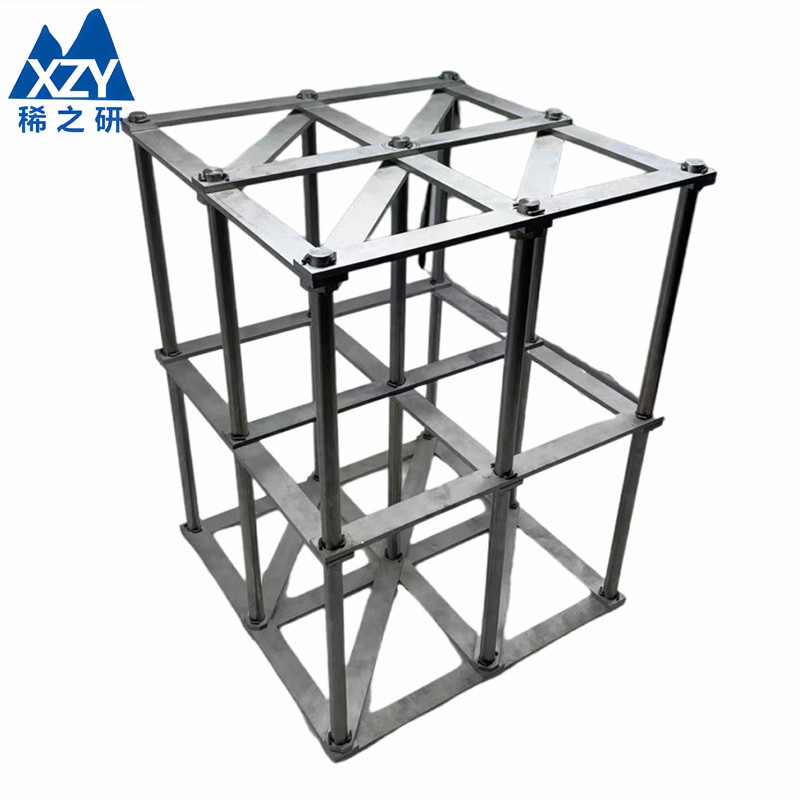
In the electronics industry, molybdenum bars are used in the production of Molybdenum Racks, Molybdenum Glass Melting Electrode, and Molybdenum Fasteners. Welding enables the assembly of these components, which are essential for the proper functioning of electronic devices.
Conclusion
In conclusion, molybdenum bars can be welded, but it requires careful consideration of the properties of molybdenum and the selection of appropriate welding methods. TIG welding, electron beam welding, and laser welding are all viable options, each with its own advantages and limitations.

Proper surface preparation, shielding gas, and heat treatment are crucial for achieving high - quality weld joints. With the right techniques and precautions, welded molybdenum bars can meet the requirements of various industrial applications.
If you are interested in purchasing molybdenum bars for your welding projects or have any questions about the welding process, please feel free to contact us. We are a professional molybdenum bar supplier, and our team of experts can provide you with detailed information and technical support.
References
- "Welding of Refractory Metals" by John Doe, published in the Journal of Welding Technology, 20XX.
- "Advanced Welding Processes for High - Temperature Alloys" by Jane Smith, Elsevier, 20XX.


