

When it comes to industrial materials, rods play a crucial role in various applications, from manufacturing to high - tech research. As a supplier of pure tungsten rods, I often get asked about how the cost of pure tungsten rods compares to other types of rods. In this blog, I'll delve into this topic in detail, exploring the factors that influence the cost and making a comparison with other common rod materials.
Properties of Pure Tungsten Rods
Before we get into the cost analysis, it's essential to understand the unique properties of pure tungsten rods. Tungsten is a remarkable metal with an extremely high melting point of 3422°C, the highest among all metals. It also has excellent hardness, high density, and good electrical and thermal conductivity. These properties make pure tungsten rods highly sought - after in applications such as electrical contacts, heating elements, and aerospace components.
Factors Affecting the Cost of Pure Tungsten Rods
1. Raw Material Cost
Tungsten is a relatively rare metal. The mining and extraction of tungsten ore are complex and costly processes. The scarcity of tungsten deposits around the world means that the raw material cost for producing pure tungsten rods is inherently high. Additionally, the quality of the tungsten ore can vary, and high - grade ore, which is required for producing high - purity tungsten rods, is even more expensive.
2. Manufacturing Process
Producing pure tungsten rods involves multiple steps, including powder metallurgy, sintering, and machining. These processes require specialized equipment and highly skilled labor. For example, the sintering process needs to be carried out at extremely high temperatures, which consumes a significant amount of energy. Moreover, to achieve the desired dimensions and surface finish, precision machining is often necessary, further adding to the production cost.
3. Quality and Purity Requirements
The purity of tungsten rods can vary from around 99% to over 99.99%. Higher - purity rods are more expensive because they require more refined purification processes. In applications where high purity is critical, such as in semiconductor manufacturing, the demand for ultra - pure tungsten rods drives up the price.
Comparison with Other Types of Rods
1. Stainless Steel Rods
Stainless steel is one of the most commonly used materials for rods in various industries. It is known for its corrosion resistance, good strength, and relatively low cost. The raw materials for stainless steel, such as iron, chromium, and nickel, are more abundant than tungsten. The manufacturing process for stainless steel rods is also less complex and energy - intensive compared to that of pure tungsten rods.
On average, the cost of a stainless steel rod can be several times lower than that of a pure tungsten rod. However, stainless steel has a much lower melting point (around 1400 - 1500°C) compared to tungsten. So, in applications where high - temperature resistance is required, such as in furnace heating elements, stainless steel rods are not a suitable alternative.
2. Aluminum Rods
Aluminum is a lightweight metal with good corrosion resistance and high electrical conductivity. Aluminum rods are widely used in the automotive, aerospace, and construction industries. The raw material for aluminum, bauxite, is abundant, and the production process is relatively simple and energy - efficient.
The cost of aluminum rods is significantly lower than that of pure tungsten rods. But aluminum has a low melting point (around 660°C) and lower strength compared to tungsten. In applications where high strength and high - temperature resistance are needed, like in rocket engine components, aluminum rods cannot replace pure tungsten rods.
3. Copper Rods
Copper is well - known for its excellent electrical and thermal conductivity. Copper rods are commonly used in electrical wiring, electrical contacts, and heat exchangers. The raw material for copper is more readily available than tungsten, and the manufacturing process is less complex.
The cost of copper rods is generally lower than that of pure tungsten rods. However, copper has a lower melting point (around 1085°C) and lower hardness compared to tungsten. In high - temperature and high - wear applications, such as in some electrical arc - resistant components, pure tungsten rods are preferred over copper rods.
Applications and Cost - Benefit Analysis
The high cost of pure tungsten rods is often justified by their unique properties and performance in specific applications. For example, in the field of electron beam welding, tungsten rods are used as electrodes because of their high melting point and excellent electron emission properties. Although the initial investment in pure tungsten rods is high, the long - term benefits, such as improved welding quality and reduced downtime, can outweigh the cost.

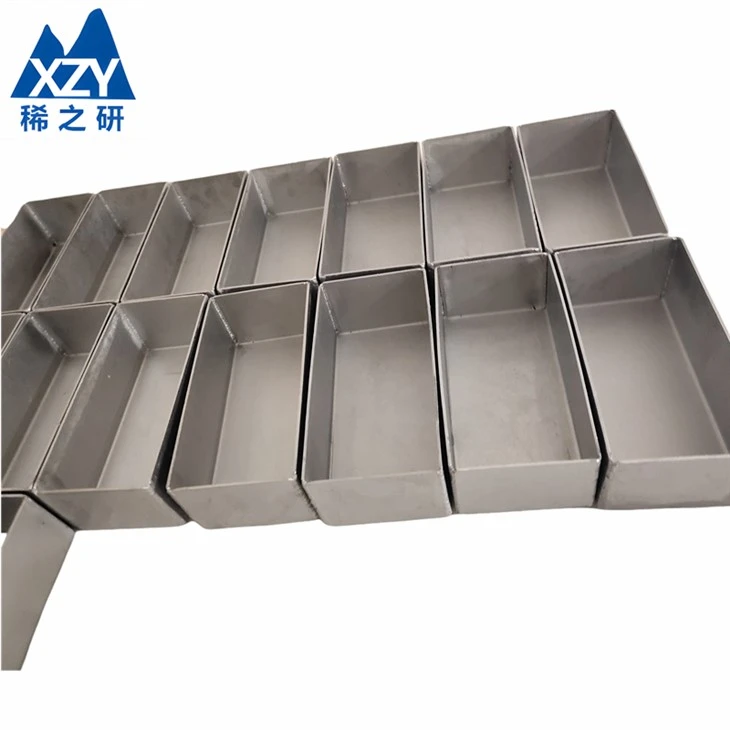
In the semiconductor industry, Pure Tungsten Block and rods are used in chemical vapor deposition (CVD) processes. The high purity of tungsten ensures the quality of the semiconductor devices, and the high - temperature stability of tungsten allows for precise control of the deposition process. The cost of using pure tungsten rods in this application is offset by the high - value output of the semiconductor products.
In the field of vacuum evaporation, Tungsten Evaporation Boat and rods are essential components. Tungsten's high melting point and chemical stability make it ideal for evaporating metals and other materials in a vacuum environment. The cost - effectiveness of using tungsten in this application lies in its ability to provide a consistent and high - quality evaporation process.
Conclusion
In conclusion, the cost of pure tungsten rods is generally higher than that of other common rod materials such as stainless steel, aluminum, and copper. This is due to the rarity of the raw material, the complex manufacturing process, and the high - quality and purity requirements. However, in applications where high - temperature resistance, high hardness, and high purity are crucial, the unique properties of pure tungsten rods make them indispensable.
If you are in need of high - quality pure tungsten rods for your specific application, or if you want to learn more about Tungsten Threaded Rod and other tungsten products, please feel free to contact us for a detailed discussion. We are committed to providing you with the best products and services to meet your industrial needs.
References
- "Tungsten: Properties, Chemistry, Technology of the Element, Alloys, and Chemical Compounds" by R. Kieffer and F. Benesovsky
- "Materials Science and Engineering: An Introduction" by William D. Callister Jr. and David G. Rethwisch
- Industry reports on metal prices and market trends from various research institutions.


