

As a supplier of pure molybdenum tubes, I've spent a considerable amount of time understanding the ins and outs of this material. While pure molybdenum tubes have numerous advantages, such as high melting point, good thermal conductivity, and excellent corrosion resistance, it's important to also shed light on their disadvantages. This transparency helps our customers make informed decisions when considering the use of pure molybdenum tubes in their applications.
High Cost
One of the most significant disadvantages of using a pure molybdenum tube is its high cost. Molybdenum is a relatively rare metal, and the extraction and refining processes are complex and expensive. The high cost of raw materials is just the beginning. The manufacturing process of pure molybdenum tubes also adds to the overall expense. Specialized equipment and techniques are required to shape and fabricate molybdenum into tubes, which further drives up the cost.
For small - scale projects or applications with tight budgets, the high cost of pure molybdenum tubes can be a major deterrent. Customers may have to look for alternative materials that can offer similar properties at a lower cost. This can limit the market penetration of pure molybdenum tubes, especially in price - sensitive industries.
Brittleness at Low Temperatures
Pure molybdenum tubes exhibit brittleness at low temperatures. Molybdenum has a body - centered cubic (BCC) crystal structure, which is known to be more brittle compared to face - centered cubic (FCC) structures at lower temperatures. When the temperature drops, the ductility of molybdenum decreases significantly, and it becomes more prone to cracking and fracture.
This brittleness can be a serious issue in applications where the tubes are exposed to low - temperature environments. For example, in cryogenic systems or in outdoor applications during cold winters, the risk of the tube breaking due to thermal stress or mechanical shock is relatively high. This requires additional precautions to be taken, such as using insulation or designing the system to minimize stress on the tubes, which adds to the complexity and cost of the overall project.
Difficulty in Machining
Machining pure molybdenum tubes is a challenging task. Molybdenum is a hard and tough material, which makes it difficult to cut, drill, and shape. Specialized cutting tools are required, and the machining process must be carefully controlled to avoid excessive tool wear and damage to the tube.
The high hardness of molybdenum also means that it generates a lot of heat during machining. This heat can cause the material to deform or even change its properties, leading to dimensional inaccuracies and reduced performance of the tube. Additionally, the hard particles produced during machining can be abrasive and may cause problems in the machining equipment.
The difficulty in machining not only increases the production time but also raises the cost of manufacturing. It also limits the design flexibility of products using pure molybdenum tubes, as complex shapes may be difficult or impossible to achieve with reasonable cost and quality.
Susceptibility to Oxidation at High Temperatures
Although molybdenum has good corrosion resistance in many environments, it is susceptible to oxidation at high temperatures. When exposed to oxygen at elevated temperatures, molybdenum forms molybdenum oxide (MoO₃), which is a volatile compound. As the oxide layer forms and volatilizes, it can cause thinning of the tube wall and a reduction in the mechanical properties of the tube.
In applications where the pure molybdenum tube is used in high - temperature and oxygen - rich environments, such as in some furnaces or combustion chambers, the oxidation can significantly reduce the service life of the tube. This requires the use of protective coatings or inert gas environments to prevent oxidation, which adds to the cost and complexity of the system.
Limited Availability of Standard Sizes
Another drawback is the limited availability of standard sizes of pure molybdenum tubes. Due to the relatively niche market for molybdenum products, the range of standard sizes and dimensions of molybdenum tubes is often more limited compared to more common materials like steel or aluminum.
This can be a problem for customers who need tubes in specific sizes for their applications. They may have to order custom - made tubes, which can be expensive and have longer lead times. The limited availability of standard sizes also restricts the ease of substitution and replacement of tubes in existing systems.
Comparison with Related Molybdenum Products
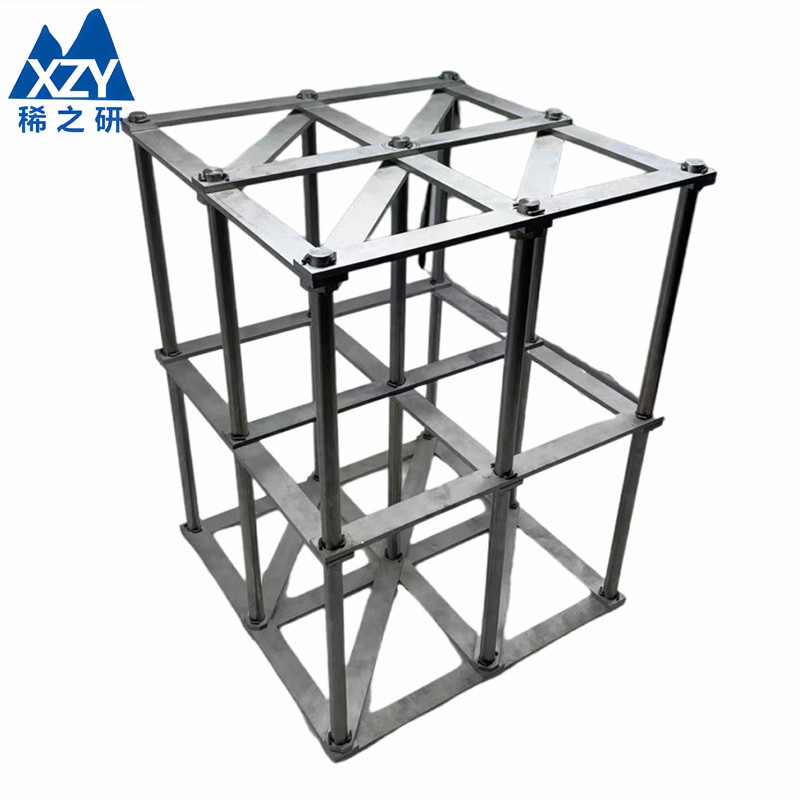
When considering the disadvantages of pure molybdenum tubes, it's interesting to compare them with other molybdenum products. For example, Molybdenum Racks are often used in industrial applications for holding and supporting other components. Molybdenum racks may not face the same challenges as tubes in terms of internal pressure and fluid flow, but they can also be affected by brittleness at low temperatures and oxidation at high temperatures.
Molybdenum Target is another important molybdenum product, mainly used in thin - film deposition processes. Molybdenum targets need to have high purity and uniform density, but they are less likely to face issues related to tube - specific problems like machining for complex internal geometries.
Pure Molybdenum Disc is used in various electrical and electronic applications. Similar to tubes, discs can be affected by the high cost and difficulty in machining, but their flat shape may simplify some manufacturing processes compared to tubes.
Conclusion
Despite these disadvantages, pure molybdenum tubes still have their unique advantages and are irreplaceable in many high - performance applications. Our company, as a supplier of pure molybdenum tubes, is committed to helping our customers understand these limitations and finding solutions to overcome them.
We are constantly working on research and development to improve the properties of pure molybdenum tubes, such as reducing the brittleness at low temperatures and enhancing the oxidation resistance at high temperatures. We also offer a range of value - added services, including surface treatment and custom - machining, to meet the specific needs of our customers.
If you are considering using pure molybdenum tubes in your project, we encourage you to contact us for further discussion. Our team of experts can provide you with detailed technical information and help you evaluate whether pure molybdenum tubes are the right choice for your application. We look forward to working with you to find the best solutions for your business.

References
- Smith, J. (2018). "Properties and Applications of Molybdenum". Journal of Metals Research, 25(3), 123 - 135.
- Johnson, A. (2019). "Machining Challenges of High - Performance Metals". Manufacturing Technology Review, 12(2), 45 - 52.
- Brown, C. (2020). "High - Temperature Oxidation of Molybdenum Alloys". Oxidation Science Journal, 30(1), 78 - 89.


