

Hey there! As a supplier of pure tungsten products, I've been dealing with this amazing material for quite some time. Today, I wanna talk about the properties of pure tungsten thin films.
First off, let's understand what pure tungsten thin films are. These are ultra - thin layers of pure tungsten, which are used in a wide range of applications. They can be made through various deposition techniques like physical vapor deposition (PVD) and chemical vapor deposition (CVD).
Physical Properties
Density
One of the most notable physical properties of pure tungsten thin films is their high density. Tungsten has a density of about 19.25 g/cm³. This high density gives the thin films excellent mechanical stability. For example, in microelectromechanical systems (MEMS), where components need to withstand mechanical stress, the high - density tungsten thin films can maintain their shape and integrity.
Melting Point
Tungsten has an incredibly high melting point of around 3422 °C, which is the highest among all metals. This property is retained in the thin - film form. So, pure tungsten thin films can be used in high - temperature applications. Think about applications in aerospace, where components are exposed to extreme heat. Tungsten thin films can be used as protective coatings on engine parts to prevent them from melting or deforming under high - temperature conditions. You can check out our Pure Tungsten Heating Element which takes advantage of this high - temperature resistance property.
Electrical Conductivity
Pure tungsten thin films have good electrical conductivity. Although not as high as some metals like copper or silver, it's still sufficient for many electronic applications. In integrated circuits, tungsten thin films can be used as interconnects. They can carry electrical signals between different components on a chip. The conductivity of tungsten thin films also makes them suitable for use in thin - film resistors.

Chemical Properties
Corrosion Resistance
Tungsten is highly resistant to corrosion. Pure tungsten thin films can form a protective oxide layer on their surface when exposed to air. This oxide layer prevents further oxidation and corrosion. In harsh chemical environments, such as in chemical processing plants, tungsten thin films can be used as coatings on equipment to protect them from chemical attack. For example, they can be used on the inner walls of reaction vessels to prevent the vessel from being corroded by strong acids or alkalis.
Chemical Inertness
Tungsten is chemically inert in many common environments. Pure tungsten thin films don't react easily with most chemicals at normal temperatures. This makes them ideal for use in biological and medical applications. For instance, in biosensors, tungsten thin films can be used as electrodes. Since they don't react with biological fluids, they can accurately detect and measure biological substances without interfering with the chemical reactions taking place in the biological sample.
Mechanical Properties
Hardness
Tungsten is a very hard metal, and this hardness is also present in its thin - film form. Pure tungsten thin films can be used as wear - resistant coatings. In cutting tools, a thin layer of tungsten can be deposited on the surface to increase its hardness and wear resistance. This extends the lifespan of the cutting tool and improves its cutting performance.
Elasticity
Although tungsten is hard, it also has a certain degree of elasticity. In micro - scale applications, such as in micro - springs or micro - actuators, pure tungsten thin films can be used. Their elasticity allows them to deform under stress and then return to their original shape, which is crucial for the proper functioning of these micro - devices.
Optical Properties
Reflectivity
Pure tungsten thin films have relatively high reflectivity in the infrared region. This property makes them useful in optical applications. For example, in infrared mirrors, tungsten thin films can be used as reflective coatings. They can reflect infrared light efficiently, which is important in applications like thermal imaging and infrared spectroscopy.
Absorption
In the visible light spectrum, tungsten thin films have a certain degree of absorption. This absorption property can be controlled by adjusting the thickness of the thin film. In some optical filters, tungsten thin films can be used to selectively absorb certain wavelengths of light, allowing only specific wavelengths to pass through.
Applications of Pure Tungsten Thin Films
The unique properties of pure tungsten thin films make them suitable for a wide range of applications. In the electronics industry, they are used in semiconductors, flat - panel displays, and memory devices. In the energy sector, they can be used in solar cells and fuel cells. In the medical field, they are used in medical imaging devices and biosensors.
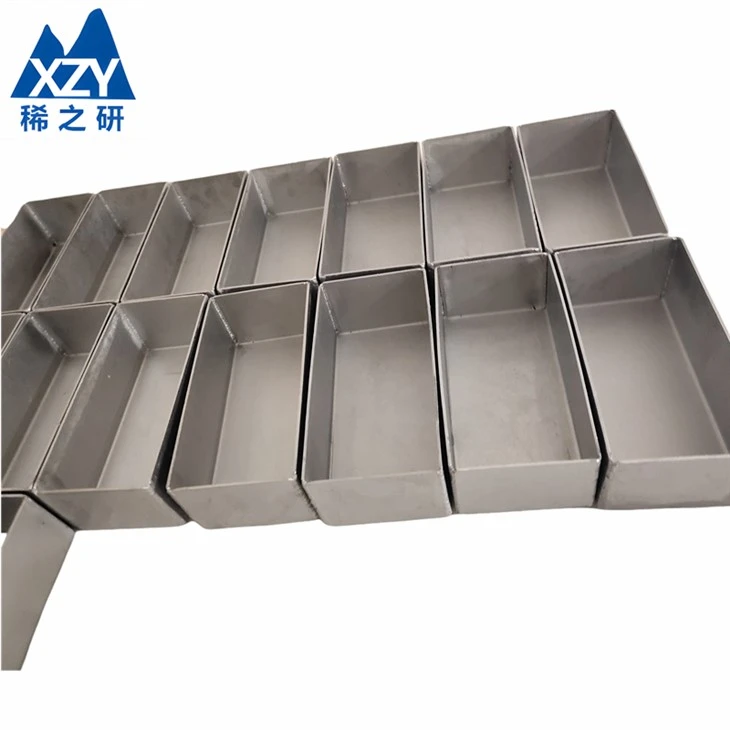
We also offer Pure Tungsten Tube and Tungsten Evaporation Boat, which are also made of high - quality pure tungsten and can be used in combination with tungsten thin films in various applications.
Why Choose Our Pure Tungsten Products
As a supplier of pure tungsten products, we take pride in offering high - quality materials. Our pure tungsten thin films are produced using advanced manufacturing techniques to ensure consistent quality and excellent performance. We have a team of experts who can provide technical support and advice on the best use of our products. Whether you're working on a small - scale research project or a large - scale industrial application, we can meet your needs.
If you're interested in our pure tungsten thin films or other pure tungsten products, don't hesitate to get in touch for a purchase negotiation. We're here to help you find the right solutions for your specific requirements.
References
- "Tungsten: Properties, Chemistry, Technology of the Element, Alloys, and Chemical Compounds" by R. Kieffer and F. Benesovsky
- "Thin Film Materials: Stress, Defect Formation and Surface Evolution" by R. Cammarata and S. Suresh
- "Handbook of Thin Film Technology" edited by L. I. Maissel and R. Glang


