

Hey there! As a supplier of molybdenum rods, I often get asked, "What is the machinability rating of a molybdenum rod?" Well, let's dive right into it and break it down in a way that's easy to understand.
First off, machinability refers to how easily a material can be cut, shaped, or otherwise machined using various tools. It's a super important factor in manufacturing, as it can greatly impact the cost and time involved in producing parts. When it comes to molybdenum rods, their machinability is influenced by several key factors.
One of the main things that affect the machinability of molybdenum rods is their hardness. Molybdenum is a pretty hard metal. On the Mohs scale, it has a hardness of about 5.5, which means it's harder than most common metals like copper and aluminum. This hardness can make it a bit more challenging to machine compared to softer materials. When you're trying to cut or drill a molybdenum rod, the tools need to be able to withstand the high forces and abrasion that come with working on a hard surface.
Another factor is the thermal conductivity of molybdenum. Molybdenum has a relatively high thermal conductivity. While this can be an advantage in some applications, like Molybdenum Sputtering Target, where heat dissipation is crucial, it can pose challenges during machining. The high thermal conductivity means that heat generated during the machining process can quickly spread throughout the material. This can lead to issues such as tool wear and deformation of the part being machined. To counter this, proper cooling and lubrication techniques need to be employed to keep the temperature in check and ensure the quality of the machined surface.
The microstructure of the molybdenum rod also plays a significant role in its machinability. Molybdenum typically has a body - centered cubic (BCC) crystal structure. The orientation and grain size of its crystals can affect how the material behaves under machining forces. For example, if the grains are too large, it can lead to uneven cutting and a rougher surface finish. On the other hand, a fine - grained microstructure can generally result in better machinability and a smoother surface.
Now, let's talk about the machinability rating itself. There isn't a one - size - fits - all number for the machinability of molybdenum rods. Different industries and applications may use different methods to rate it. One common way is to compare it to a reference material, usually B1112 steel, which is given a machinability rating of 100%.
Molybdenum rods typically have a machinability rating of around 30 - 40% compared to B1112 steel. This means that it's about three to four times more difficult to machine molybdenum rods than the reference steel. However, this rating can vary depending on the specific grade of molybdenum, the machining process being used, and the quality of the tools.
When it comes to machining molybdenum rods, there are several techniques that can be used. Turning is one of the most common methods. It involves rotating the rod while a cutting tool removes material from the surface. To achieve good results in turning a molybdenum rod, you need to use sharp tools with a proper rake angle. A positive rake angle can help reduce cutting forces and improve chip formation.
Drilling is another important machining process. When drilling a molybdenum rod, it's essential to use high - speed steel or carbide drills. The drills should be sharp and have a proper point angle. Feed rate and cutting speed also need to be carefully controlled. A too - high feed rate can cause excessive tool wear, while a too - low speed can lead to poor chip evacuation and overheating.
Milling is also used to create complex shapes on molybdenum rods. Similar to turning and drilling, the correct choice of milling cutters, cutting parameters, and cooling methods are crucial. End mills, ball - nose mills, and face mills can all be used depending on the specific requirements of the part.
At our company, we understand the challenges and requirements of machining molybdenum rods. We offer high - quality molybdenum rods that are carefully processed to ensure the best possible machinability. Our rods are made from top - grade raw materials and are inspected at every step of the production process to guarantee their quality.

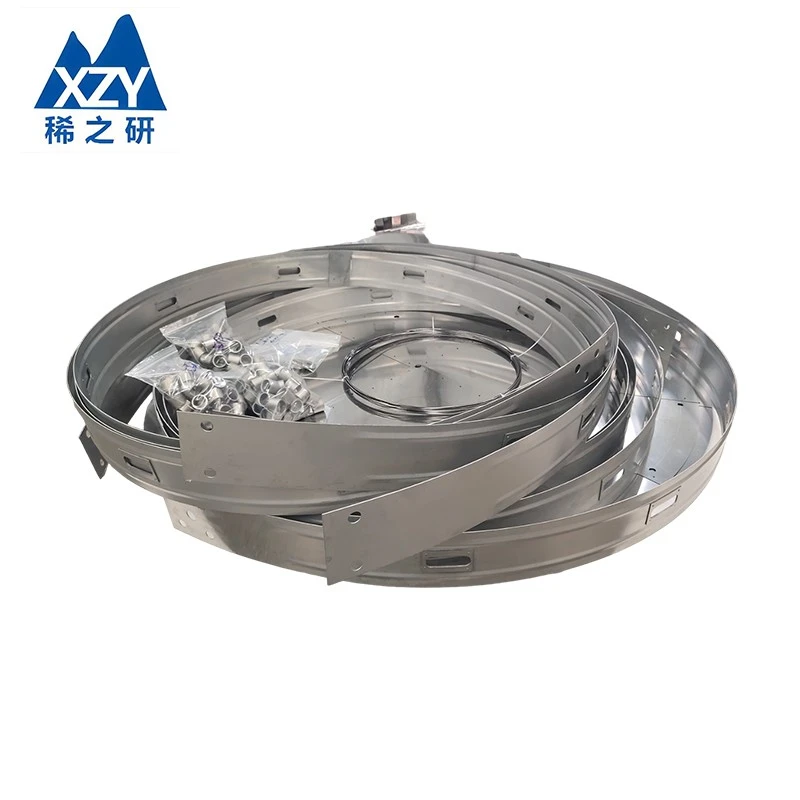
In addition to molybdenum rods, we also provide other molybdenum products such as Molybdenum Heating Elements and Molybdenum Hot Zone. These products are designed to meet the diverse needs of various industries, including aerospace, electronics, and manufacturing.
If you're in the market for molybdenum rods or any of our other molybdenum products, we'd love to hear from you. Whether you're a small - scale manufacturer or a large - scale industrial company, we can provide you with the right solutions at competitive prices. Our team of experts is always ready to assist you with any technical questions or concerns you may have. So, don't hesitate to reach out and start a conversation about your procurement needs.
References:
- ASM Handbook Volume 16: Machining, ASM International
- "Machinability of Metals" by John A. Schey


