

In the realm of materials science and engineering, understanding the properties of various metals is crucial for a wide range of applications. One such metal that has gained significant attention due to its unique characteristics is molybdenum. As a leading supplier of molybdenum bars, I am often asked about the Poisson's ratio of molybdenum bars. In this blog post, I will delve into the concept of Poisson's ratio, explain what it means for molybdenum bars, and discuss its implications in different industries.
Understanding Poisson's Ratio
Poisson's ratio is a fundamental material property that describes the relationship between the transverse strain and the longitudinal strain of a material when it is subjected to an axial load. When a material is stretched or compressed in one direction, it will also deform in the perpendicular directions. Poisson's ratio, denoted by the Greek letter ν (nu), is defined as the negative ratio of the transverse strain (ε_transverse) to the longitudinal strain (ε_longitudinal):
ν = -ε_transverse / ε_longitudinal
The negative sign is included to ensure that Poisson's ratio is a positive value, as the transverse strain is typically in the opposite direction of the longitudinal strain. Poisson's ratio is a dimensionless quantity and ranges from -1 to 0.5 for most materials. A value of 0.5 indicates that the material is incompressible, meaning that its volume remains constant when subjected to an axial load. A value of 0 indicates that there is no transverse deformation when the material is stretched or compressed.
Poisson's Ratio of Molybdenum Bar
Molybdenum is a refractory metal with excellent high-temperature strength, corrosion resistance, and thermal conductivity. These properties make it a popular choice for a variety of applications, including aerospace, electronics, and chemical processing. The Poisson's ratio of molybdenum is approximately 0.32. This value indicates that when a molybdenum bar is stretched or compressed in one direction, it will contract or expand in the perpendicular directions by about 32% of the longitudinal strain.
The relatively high Poisson's ratio of molybdenum has several implications for its use in engineering applications. For example, when a molybdenum bar is used in a structural application, the transverse deformation caused by the Poisson's effect must be taken into account to ensure the structural integrity of the component. In addition, the Poisson's ratio affects the material's shear modulus, which is a measure of its resistance to shear deformation. A higher Poisson's ratio generally results in a lower shear modulus, which can impact the material's performance in applications where shear forces are present.
Applications of Molybdenum Bars and the Role of Poisson's Ratio
Aerospace Industry
In the aerospace industry, molybdenum bars are used in a variety of applications, such as turbine blades, rocket nozzles, and structural components. The high-temperature strength and corrosion resistance of molybdenum make it an ideal material for these applications. The Poisson's ratio of molybdenum plays an important role in the design of these components, as it affects the stress distribution and deformation behavior under different loading conditions. For example, in a turbine blade, the Poisson's effect can cause the blade to deform transversely when subjected to centrifugal forces during operation. This deformation must be carefully considered to ensure that the blade does not experience excessive stress or failure.
Electronics Industry
Molybdenum is also widely used in the electronics industry, particularly in the manufacture of semiconductor devices and electronic components. The excellent thermal conductivity and low coefficient of thermal expansion of molybdenum make it a suitable material for heat sinks and substrates. The Poisson's ratio of molybdenum affects the thermal stress distribution in these components, as the transverse deformation caused by the Poisson's effect can lead to additional stress concentrations. By understanding the Poisson's ratio of molybdenum, engineers can design more reliable and efficient electronic components.
Chemical Processing Industry
In the chemical processing industry, molybdenum bars are used in equipment such as reactors, heat exchangers, and pipes. The corrosion resistance of molybdenum makes it a popular choice for handling corrosive chemicals. The Poisson's ratio of molybdenum is important in these applications, as it can affect the seal integrity and structural stability of the equipment. For example, in a pipe joint, the transverse deformation caused by the Poisson's effect can lead to leakage if the joint is not properly designed to accommodate this deformation.
Our Molybdenum Bar Products and Related Offerings
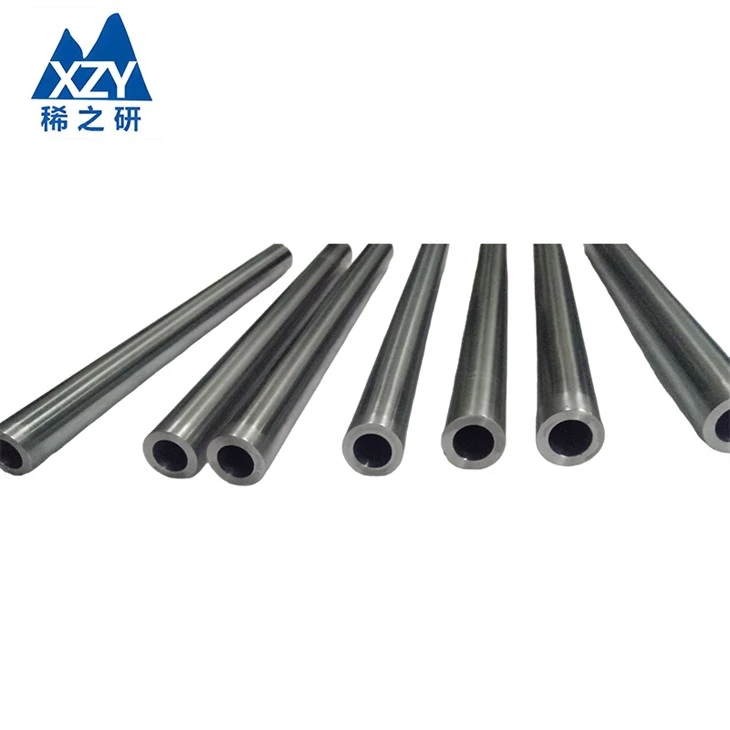
As a trusted supplier of molybdenum bars, we offer a wide range of high-quality products to meet the diverse needs of our customers. Our molybdenum bars are available in various sizes, shapes, and grades, and can be customized to specific requirements. In addition to molybdenum bars, we also provide other molybdenum products, such as Molybdenum Racks, Molybdenum Heat Shield, and Pure Molybdenum Tube. These products are widely used in different industries and have received positive feedback from our customers.

Importance of Accurate Poisson's Ratio Knowledge
Accurate knowledge of the Poisson's ratio of molybdenum bars is essential for engineers and designers. It allows them to make informed decisions about material selection, component design, and performance prediction. By considering the Poisson's ratio in the design process, they can optimize the performance of molybdenum components, reduce the risk of failure, and improve the overall efficiency of the system.
Contact Us for Molybdenum Bar Procurement
If you are interested in purchasing molybdenum bars or other molybdenum products, please feel free to contact us. Our team of experts is ready to provide you with detailed product information, technical support, and competitive pricing. We are committed to delivering high-quality products and excellent customer service to meet your specific needs. Whether you are working on a small-scale project or a large industrial application, we have the right solution for you.
References
- ASM Handbook, Volume 2: Properties and Selection: Nonferrous Alloys and Special-Purpose Materials, ASM International, 1990.
- Callister, W. D., & Rethwisch, D. G. (2012). Materials Science and Engineering: An Introduction. Wiley.
- Davis, J. R., ed. (1994). Handbook of Refractory Metals: Tantalum, Niobium, Molybdenum, Tungsten. ASM International.


