

Pure molybdenum rods are highly sought - after materials in various industrial applications due to their excellent physical and chemical properties, especially their remarkable corrosion resistance. As a supplier of pure molybdenum rods, I am well - versed in the types of corrosion these rods can resist, which is crucial for customers looking for reliable and long - lasting materials.

Resistance to Oxidation Corrosion
One of the most common forms of corrosion is oxidation, which occurs when a metal reacts with oxygen in the air. Pure molybdenum rods have good oxidation resistance at moderate temperatures. At room temperature, molybdenum forms a thin, protective oxide layer on its surface. This oxide layer acts as a barrier, preventing further oxidation and protecting the underlying metal from degradation.
However, the oxidation resistance of molybdenum is temperature - dependent. As the temperature rises above 400°C (752°F), the oxidation rate increases. But compared to many other metals, molybdenum still maintains a relatively stable state. At high temperatures in an oxygen - containing environment, the oxide layer may break down, but molybdenum's high melting point (2623°C or 4753°F) allows it to withstand these conditions without significant structural failure for a certain period. This makes pure molybdenum rods suitable for applications in high - temperature furnaces and heating elements where oxidation is a concern.
Resistance to Acid Corrosion
Pure molybdenum rods exhibit varying degrees of resistance to different acids. In dilute sulfuric acid, molybdenum is quite resistant. The slow reaction rate with sulfuric acid is due to the formation of a passive film on the surface of the molybdenum rod. This passive film prevents the acid from further attacking the metal. For example, in a solution of less than 10% sulfuric acid at room temperature, molybdenum shows minimal corrosion.
In hydrochloric acid, molybdenum also has a certain level of resistance. However, the resistance is more limited compared to sulfuric acid. Concentrated hydrochloric acid can gradually corrode molybdenum, but at lower concentrations and moderate temperatures, the corrosion rate is relatively slow.
Nitric acid, on the other hand, is a strong oxidizing acid that can react with molybdenum more aggressively. Concentrated nitric acid can rapidly dissolve molybdenum. But in dilute nitric acid solutions, the corrosion process is slower, and the formation of surface oxides can provide some protection.
Resistance to Alkali Corrosion
When it comes to alkali corrosion, pure molybdenum rods have good resistance. In most alkaline solutions, such as sodium hydroxide and potassium hydroxide solutions, molybdenum forms a stable hydroxide layer on its surface. This layer acts as a protective shield, preventing the alkali from penetrating the metal and causing corrosion. For instance, in a sodium hydroxide solution with a concentration of up to 10% at room temperature, molybdenum rods show very low corrosion rates. This property makes molybdenum rods suitable for use in alkaline - based industrial processes, such as in some chemical manufacturing and wastewater treatment applications.
Resistance to Corrosion in Salt Environments
Salt environments can be particularly corrosive to many metals. Pure molybdenum rods, however, have a certain degree of resistance to salt - induced corrosion. In sodium chloride solutions, which are commonly found in marine and some industrial settings, molybdenum forms a protective layer that inhibits the electrochemical reactions that lead to corrosion. The chloride ions in the salt solution can potentially break down the protective layer, but molybdenum's inherent stability helps to maintain its integrity. This makes molybdenum rods a good choice for applications in marine equipment and in industries where exposure to salt - containing solutions is common.
Applications of Pure Molybdenum Rods Based on Corrosion Resistance
The excellent corrosion - resistant properties of pure molybdenum rods make them suitable for a wide range of applications. In the glass industry, Molybdenum Glass Melting Electrode are used. These electrodes need to withstand high - temperature molten glass and the corrosive environment inside the glass - melting furnace. The oxidation and acid - resistance of molybdenum ensure a long service life for the electrodes, reducing the need for frequent replacements.
In the semiconductor industry, pure molybdenum rods are used in various manufacturing processes. The resistance to acid and alkali corrosion is crucial as semiconductor manufacturing often involves the use of different chemical solutions. Molybdenum's stability in these environments helps to maintain the precision and quality of semiconductor components.
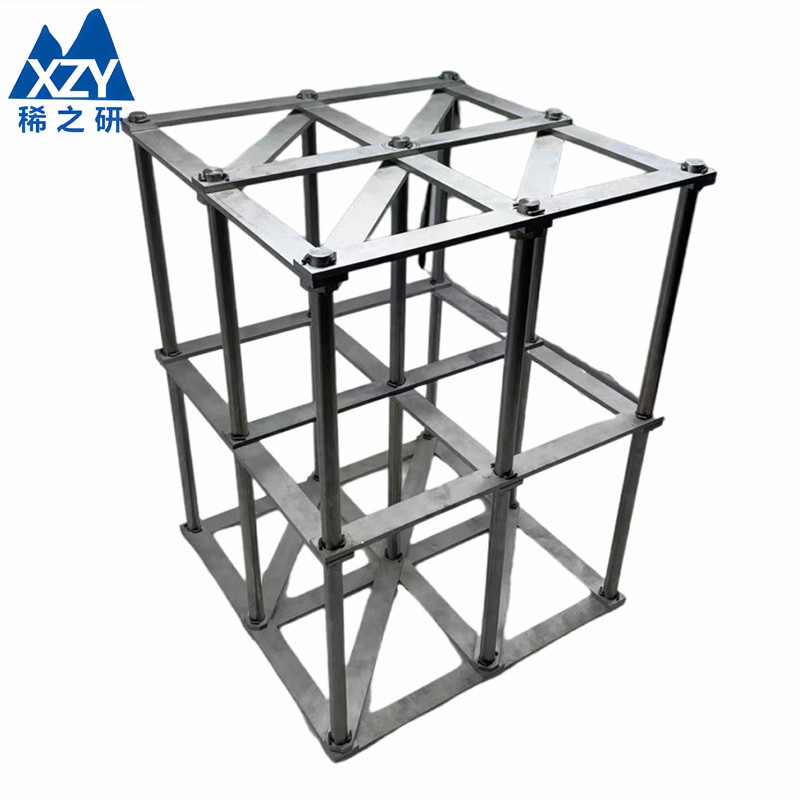
Molybdenum Racks are another application. These racks are used to hold and transport materials in different industrial processes. The corrosion - resistant properties of molybdenum ensure that the racks can withstand the harsh chemical and environmental conditions, protecting the materials they hold.
Pure Molybdenum Tube is also a popular product. These tubes are used in applications such as heat exchangers and fluid - handling systems. The resistance to oxidation, acid, alkali, and salt corrosion allows the tubes to operate efficiently and reliably in different environments.
Contact for Procurement
If you are in need of high - quality pure molybdenum rods for your specific applications, our company is here to provide you with the best products. Our pure molybdenum rods are manufactured with strict quality control measures to ensure their excellent corrosion - resistant properties. We can also offer customized solutions based on your requirements. Whether you are in the glass industry, semiconductor industry, or any other field that requires corrosion - resistant materials, we are ready to assist you. Please feel free to contact us to discuss your procurement needs and start a successful business cooperation.
References
- ASM Handbook Volume 13A: Corrosion: Fundamentals, Testing, and Protection.
- Metals Handbook Desk Edition, 3rd Edition.
- "Corrosion Resistance of Molybdenum Alloys" by various research papers in the Journal of Materials Science.


