

Hey there! As a supplier of pure molybdenum rods, I often get asked about the best welding methods for these rods. Molybdenum is a super useful metal, known for its high melting point, excellent thermal conductivity, and good corrosion resistance. But welding it isn't as straightforward as some other metals. In this blog, I'll break down the appropriate welding methods for pure molybdenum rods.
Why Welding Molybdenum Rods Can Be Tricky
First off, let's talk about why welding pure molybdenum rods can be a bit of a challenge. Molybdenum has a high melting point (around 2623°C or 4753°F). That means you need a lot of heat to get it to weld properly. Also, it can react with oxygen at high temperatures, forming oxides that can weaken the weld. And it's prone to cracking during the welding process due to its low ductility at room temperature.
Tungsten Inert Gas (TIG) Welding
One of the most popular methods for welding pure molybdenum rods is Tungsten Inert Gas (TIG) welding. This method uses a non - consumable tungsten electrode to create an arc that melts the molybdenum. An inert gas, usually argon, is used to shield the weld area from oxygen and other contaminants.
The main advantage of TIG welding for molybdenum is that it gives you precise control over the heat input. You can adjust the amperage and the duration of the arc, which is crucial when working with a metal that has a high melting point like molybdenum. Also, the use of an inert gas prevents oxidation, which helps to maintain the integrity of the weld.
However, TIG welding requires a skilled operator. You need to have good hand - eye coordination to keep the electrode at the right distance from the workpiece and to feed the filler metal (if needed) smoothly. It's also a relatively slow process compared to some other welding methods.

Electron Beam Welding
Another great option for welding pure molybdenum rods is electron beam welding. In this method, a high - velocity beam of electrons is focused on the joint between the molybdenum rods. The kinetic energy of the electrons is converted into heat, melting the metal and creating a weld.
The big advantage of electron beam welding is its high energy density. This means that you can achieve deep and narrow welds with minimal heat - affected zones. Since molybdenum is sensitive to heat, a small heat - affected zone is a huge plus as it reduces the risk of cracking. Also, electron beam welding is done in a vacuum, which completely eliminates the problem of oxidation.
But electron beam welding has its drawbacks too. The equipment is expensive and requires a lot of maintenance. And it's not very flexible in terms of the size and shape of the workpieces. You need to have a well - designed setup to accommodate the rods and to ensure that the electron beam hits the joint accurately.
Laser Beam Welding
Laser beam welding is also a viable option for pure molybdenum rods. In this method, a high - power laser beam is used to melt the metal at the joint. Similar to electron beam welding, laser beam welding offers high energy density and precise control over the heat input.
The benefits of laser beam welding include its speed and the ability to weld complex shapes. You can easily adjust the laser beam's intensity, focus, and position, which makes it suitable for a wide range of applications. And like electron beam welding, it can be done in an inert gas environment to prevent oxidation.
However, laser beam welding also has some limitations. The initial investment in the laser welding equipment is high. And the quality of the weld can be affected by factors such as the surface finish of the molybdenum rods and the alignment of the laser beam.
Resistance Welding
Resistance welding is a simple and cost - effective method for welding pure molybdenum rods. In this method, an electric current is passed through the joint between the rods, and the resistance to the current flow generates heat, melting the metal and creating a weld.
The advantage of resistance welding is its speed. It can produce welds quickly, which is great for high - volume production. It also doesn't require any filler metal, which can save costs. And it's relatively easy to automate, making it suitable for mass production.
But resistance welding has its issues. It can be difficult to control the heat input precisely, which can lead to uneven welds or overheating in some areas. Also, the electrodes used in resistance welding can wear out quickly, especially when welding a hard metal like molybdenum.
Choosing the Right Welding Method
So, how do you choose the right welding method for your pure molybdenum rods? Well, it depends on several factors.
If you need high - quality, precise welds and have a skilled operator, TIG welding might be the way to go. It's great for small - scale production or when you need to weld complex joints.
For deep and narrow welds with minimal heat - affected zones, electron beam welding is a top choice. But it's more suitable for large - scale production where you can justify the high equipment cost.
Laser beam welding is a good option if you need speed and flexibility. It can handle a variety of shapes and sizes, and it's suitable for both small - and large - scale production.
And if you're looking for a cost - effective and fast method for high - volume production, resistance welding is worth considering.
Our Pure Molybdenum Rods and Related Products
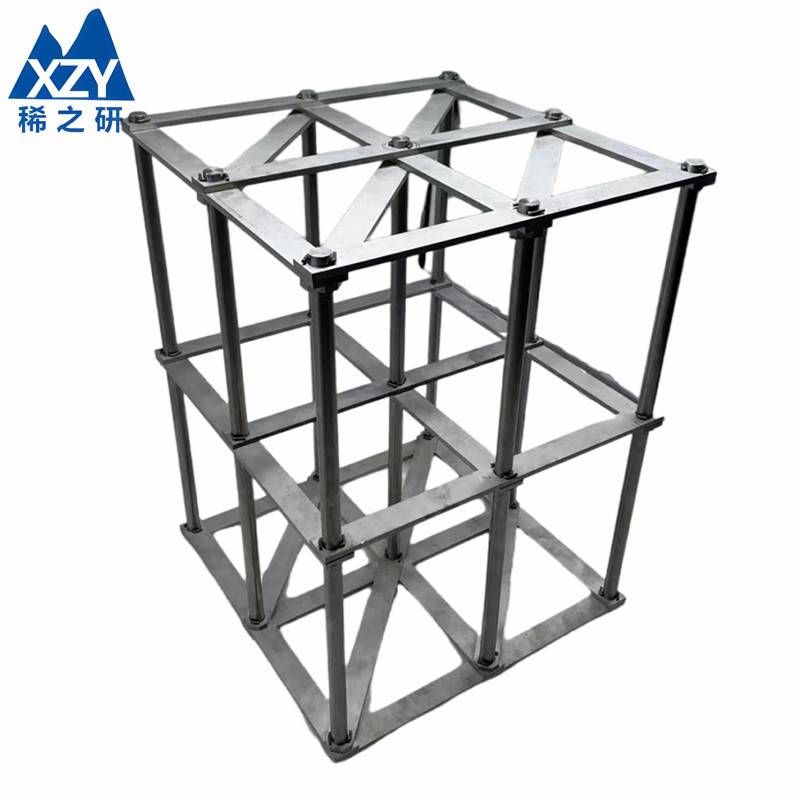
At our company, we offer high - quality pure molybdenum rods that are suitable for a wide range of applications. In addition to the rods, we also have other molybdenum products such as Molybdenum Racks, Molybdenum Tray, and Molybdenum Fasteners. These products are made from the same high - quality molybdenum material and can be used in conjunction with the welded molybdenum rods.
If you're in the market for pure molybdenum rods or have any questions about welding them, don't hesitate to get in touch. We're here to help you find the best solutions for your needs. Whether you're a small - scale manufacturer or a large industrial company, we can provide you with the right products and advice.
References
- "Welding Metallurgy" by John C. Lippold and David K. Matlock
- "The Welding Handbook" by the American Welding Society
- "Materials Science and Engineering: An Introduction" by William D. Callister Jr. and David G. Rethwisch


