

Hey there! I'm a supplier of pure tungsten, and today I want to have a chat about the question on many people's minds: Can pure tungsten be easily machined? It's a topic that comes up a lot in my line of work, and there's a lot to unpack here.
First off, let's talk about what pure tungsten is. Tungsten is a heavy metal with an atomic number of 74 on the periodic table. It's known for some super - impressive properties. It has the highest melting point of all the metal elements, clocking in at around 3,422 degrees Celsius. That's insanely high! It also has high density, excellent electrical conductivity, and great creep resistance at high temperatures. These properties make it a top - notch choice in many high - tech industries, like aerospace, electronics, and even military applications.
But when it comes to machining, things get a bit tricky. Machining is the process of shaping a material by removing parts of it using tools. For most metals, this is a fairly straightforward process, but pure tungsten is a whole different ballgame.
One of the main reasons pure tungsten is tough to machine is its hardness. It's one of the hardest metals out there. This hardness means that traditional machining tools can wear out really quickly. When you're trying to cut, drill, or mill pure tungsten, the tools have to work extra hard against the material. The high forces involved can cause the cutting edges of the tools to dull rapidly. It's like trying to cut through a diamond with a butter knife – it just doesn't work well.
Another issue is the brittleness of pure tungsten. At room temperature, it can be quite brittle. During the machining process, sudden impacts or high - speed cutting can cause the material to crack or fracture. This brittleness makes it difficult to achieve precise shapes without damaging the workpiece. For example, if you're trying to drill a small hole in a pure tungsten piece, any misstep in the drilling process can lead to a crack, ruining the whole part.
The high melting point also plays a role. When you're machining, a lot of heat is generated due to the friction between the tool and the material. With pure tungsten's extremely high melting point, this heat can't just make the material melt easily. Instead, the heat builds up in the tool and the workpiece. Overheating can lead to thermal stress in the tungsten, which can cause more cracking and also reduce the tool's lifespan even further.
Despite these challenges, it is possible to machine pure tungsten, but it requires some special techniques and the right equipment. One approach is to use high - speed machining with very sharp and hard cutting tools. Carbide tools are often a good choice because they are hard enough to withstand the forces involved in cutting tungsten. However, these tools need to be carefully selected and maintained to ensure they can handle the job.
Heat treatment can also help. By heating the tungsten to a specific temperature range and then cooling it in a controlled way, you can reduce its brittleness. This makes it more malleable during machining and less likely to crack. But this process needs to be done precisely, as incorrect heat treatment can actually make the situation worse.
Another option is to use electrical discharge machining (EDM). EDM uses electrical discharges to remove material from the workpiece. It doesn't rely on physical contact between the tool and the material, so it can get around some of the problems associated with the hardness and brittleness of pure tungsten. However, EDM is a relatively slow and expensive process, so it's not always the most practical option for large - scale production.
Now, let me tell you about some of the pure tungsten products we offer. We have Pure Tungsten Wire, which is used in a variety of applications such as lighting filaments, electron emitters, and heating elements. The wire is made with high - quality pure tungsten, but as you can imagine, getting it to the right diameter and surface finish during the machining process is no easy feat.

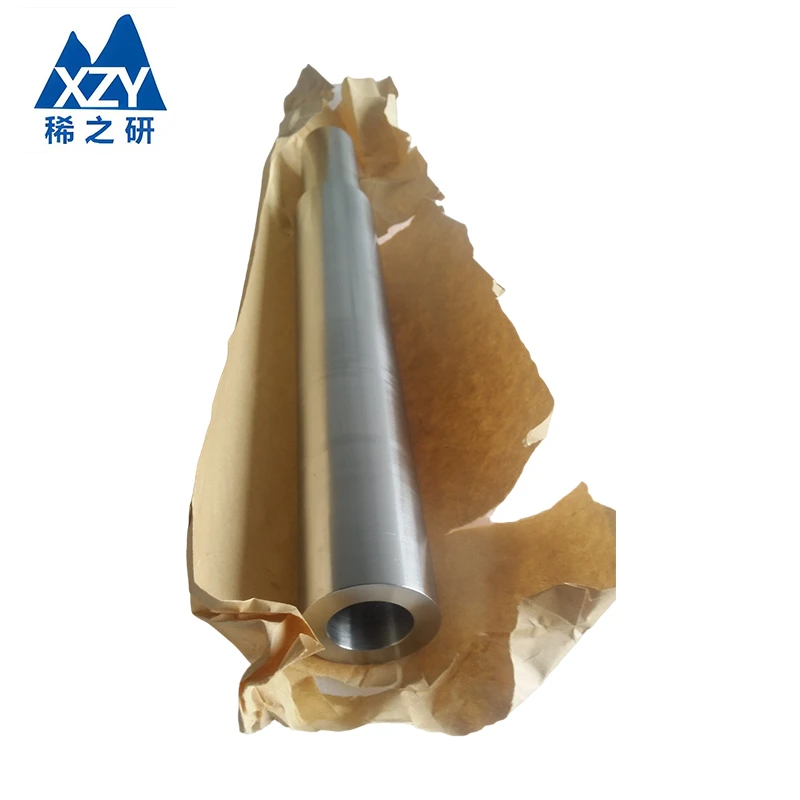
Our Pure Tungsten Tube is another popular product. Tubes made of pure tungsten are used in chemical vessels, high - temperature furnaces, and other applications where corrosion resistance and high - temperature stability are crucial. Making these tubes requires precise machining to ensure they have the right dimensions and wall thickness.
We also offer Pure Tungsten Sheet, which is used in electronics, aerospace, and other industries. Machining these sheets to get the desired shape and smoothness is a detailed process, given the challenges of working with pure tungsten.
In conclusion, while pure tungsten is an amazing material with lots of great properties, it is not easily machined. The hardness, brittleness, and high melting point all present significant challenges. But with the right techniques, advanced equipment, and plenty of expertise, it is possible to machine pure tungsten to meet various industrial needs.
If you're in the market for pure tungsten products or have any questions about our machining capabilities, don't hesitate to reach out. We're always here to help with your tungsten needs. Whether you need a custom - machined part or a standard product, we can work with you to find the best solution.
References
- “Metals Handbook: Machining”, ASM International.
- “Tungsten: Properties, Chemistry, Technology of the Element, Alloys and Chemical Compounds”, Springer.


