

The microstructure of a material plays a pivotal role in determining its properties. In the case of a pure tungsten tube, understanding how the microstructure affects its properties can provide valuable insights for various applications. As a supplier of pure tungsten tubes, I have witnessed firsthand the significance of microstructure in influencing the performance of these tubes. In this blog, I will delve into the relationship between the microstructure of a pure tungsten tube and its properties.
Microstructure Basics of Pure Tungsten
Pure tungsten typically has a body - centered cubic (BCC) crystal structure at room temperature. The microstructure of a pure tungsten tube can be characterized by several factors, including grain size, grain orientation, and the presence of defects such as dislocations, vacancies, and impurities.
Grain size is one of the most important microstructural features. Smaller grain sizes generally lead to increased strength and hardness. This is because the grain boundaries act as barriers to the movement of dislocations. When a material is deformed, dislocations are generated and move through the crystal lattice. Grain boundaries impede the motion of these dislocations, causing them to pile up at the boundaries. As a result, more energy is required to continue the deformation process, leading to higher strength. For a pure tungsten tube, a finer - grained microstructure can enhance its mechanical properties, making it more resistant to deformation under stress.
Grain orientation also has a significant impact on the properties of the tungsten tube. In a polycrystalline material like tungsten, individual grains can have different crystallographic orientations. Anisotropy in properties can occur due to the preferred orientation of grains. For example, the mechanical properties of a tungsten tube may vary depending on the direction of loading relative to the grain orientation. If the grains are oriented in a way that the applied stress is aligned with the favorable crystallographic planes, the tube may exhibit better ductility and lower strength in that direction. On the other hand, if the stress is applied perpendicular to the favorable planes, the tube may be more brittle and have higher strength.
Defects in the microstructure, such as dislocations and vacancies, can also affect the properties of the pure tungsten tube. Dislocations can interact with each other and with other defects, influencing the deformation behavior of the material. Vacancies, which are missing atoms in the crystal lattice, can affect diffusion processes within the material. Diffusion is important for processes such as recrystallization, creep, and sintering. In a tungsten tube, the presence of vacancies can accelerate or decelerate these processes, thereby affecting the long - term stability and performance of the tube.
Impact on Mechanical Properties
The mechanical properties of a pure tungsten tube, including strength, hardness, ductility, and toughness, are strongly influenced by its microstructure. As mentioned earlier, a fine - grained microstructure generally leads to higher strength and hardness. In applications where the tube is subjected to high - stress conditions, such as in high - temperature furnaces or aerospace components, a high - strength tungsten tube is required. A tube with a fine - grained microstructure can withstand greater loads without deforming or failing.
Ductility, which is the ability of a material to deform plastically before fracturing, is also affected by the microstructure. Coarse - grained tungsten tubes may exhibit better ductility compared to fine - grained ones under certain conditions. This is because in a coarse - grained material, dislocations can move more freely over longer distances, allowing for more plastic deformation. However, in high - temperature applications, fine - grained tungsten tubes may still have acceptable ductility due to the enhanced diffusion processes at elevated temperatures.
Toughness, which is the ability of a material to absorb energy before fracturing, is related to both strength and ductility. A well - balanced microstructure that combines appropriate grain size and orientation can result in a tungsten tube with high toughness. In applications where the tube may be subjected to impact loads, such as in some industrial machinery, a tough tungsten tube is essential to prevent sudden and catastrophic failure.
Impact on Thermal Properties
The thermal properties of a pure tungsten tube, such as thermal conductivity and thermal expansion coefficient, are also affected by its microstructure. Thermal conductivity is a measure of how well a material can conduct heat. In tungsten, the thermal conductivity is mainly due to the movement of electrons. The presence of grain boundaries and defects in the microstructure can scatter electrons, reducing the thermal conductivity. A coarse - grained tungsten tube generally has higher thermal conductivity than a fine - grained one because there are fewer grain boundaries to impede the electron flow.
The thermal expansion coefficient, which is the change in length or volume of a material with a change in temperature, is also influenced by the microstructure. Grain boundaries can act as regions of high stress during thermal expansion or contraction. A fine - grained microstructure may have a slightly different thermal expansion behavior compared to a coarse - grained one. In applications where the tungsten tube is used in a high - temperature environment with significant temperature variations, understanding the thermal expansion characteristics is crucial to prevent thermal stress - induced cracking or failure.
Impact on Electrical Properties
The electrical properties of a pure tungsten tube, including electrical resistivity, are affected by the microstructure. Electrical resistivity is the resistance of a material to the flow of electric current. Similar to thermal conductivity, the presence of grain boundaries and defects in the microstructure can scatter electrons, increasing the electrical resistivity. A fine - grained tungsten tube typically has a higher electrical resistivity than a coarse - grained one.
In applications where the tungsten tube is used as an electrical conductor, such as in Pure Tungsten Heating Element, the electrical resistivity is an important parameter. A tube with an appropriate resistivity can be selected based on the specific requirements of the heating element, such as the desired power output and operating temperature.

Applications and Microstructure Considerations
The microstructure of a pure tungsten tube has implications for its various applications. In the aerospace industry, tungsten tubes are used in components such as rocket nozzles and heat shields. These applications require high - strength, high - temperature - resistant tubes. A fine - grained microstructure can provide the necessary strength and hardness, while also ensuring good resistance to thermal fatigue.
In the electronics industry, tungsten tubes are used in vacuum tubes, X - ray tubes, and other electronic devices. For these applications, the electrical and thermal properties of the tube are critical. A microstructure that balances electrical resistivity and thermal conductivity is required to ensure efficient operation of the devices.
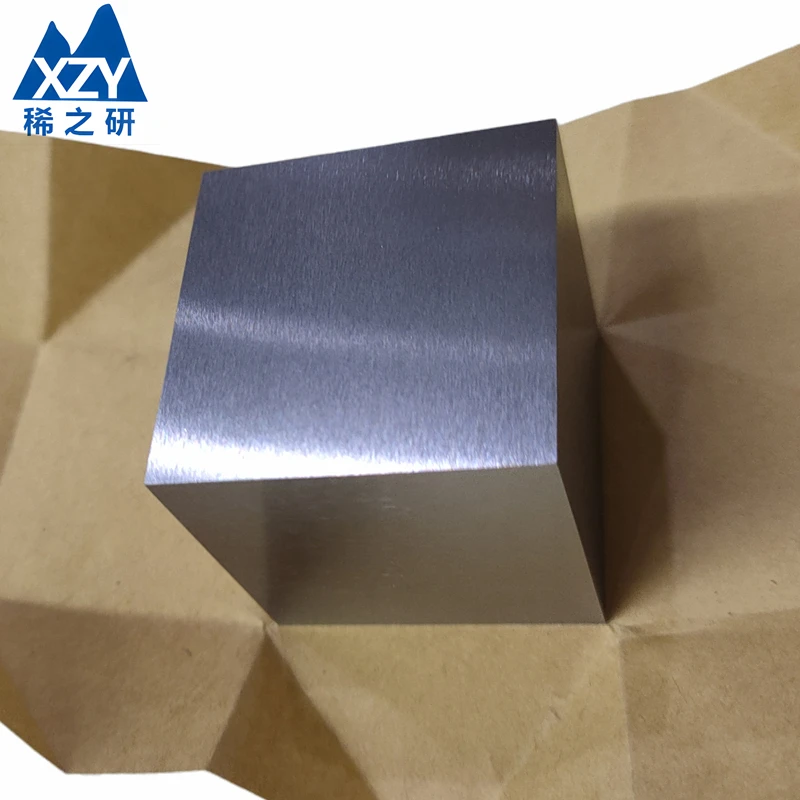
In the manufacturing of Pure Tungsten Block and Pure Tungsten Crucible, the properties of the tungsten tube used in the production process can also affect the final product. For example, a tube with good thermal and mechanical properties can be used to fabricate high - quality crucibles that can withstand high - temperature melting and casting processes.
Conclusion
In conclusion, the microstructure of a pure tungsten tube has a profound impact on its mechanical, thermal, and electrical properties. Grain size, grain orientation, and the presence of defects all play important roles in determining the performance of the tube in various applications. As a supplier of pure tungsten tubes, we understand the importance of controlling the microstructure to meet the specific requirements of our customers.
If you are in need of high - quality pure tungsten tubes for your specific application, we are here to provide you with the best solutions. Our team of experts can work with you to understand your needs and recommend the most suitable microstructure and properties for your project. Contact us for procurement and let's start a productive discussion about how our pure tungsten tubes can meet your requirements.
References
- Smith, J. W., & Jones, R. K. (2015). Materials Science and Engineering: An Introduction. Wiley.
- Callister, W. D., & Rethwisch, D. G. (2014). Materials Science and Engineering: An Introduction. Wiley.
- Smithells, C. J. (2004). Smithells Metals Reference Book. Butterworth - Heinemann.


