
Hey there! I'm a supplier of pure tungsten wire, and today I wanna chat about how the surface treatment of pure tungsten wire can affect its performance.
First off, let's understand what pure tungsten wire is. Tungsten is a super cool metal. It's got a crazy high melting point, which is around 3422°C. That's way hotter than most metals can handle. Pure tungsten wire is used in a bunch of industries, like electronics, lighting, and aerospace. It's used in things like filaments for light bulbs, heating elements in furnaces, and even in some high - tech aerospace components.
Now, surface treatment is like giving your tungsten wire a little makeover. There are different types of surface treatments, and each one can change the wire's performance in unique ways.
Oxide Coating Treatment
One common surface treatment is applying an oxide coating. Oxide coatings can be formed by heating the tungsten wire in an oxygen - rich environment. This creates a thin layer of tungsten oxide on the surface.
The good thing about an oxide coating is that it can improve the wire's oxidation resistance. In normal conditions, tungsten can start to oxidize when exposed to air, especially at high temperatures. But with an oxide coating, it acts as a barrier. It slows down the oxidation process, which means the wire can last longer in high - temperature applications. For example, in a heating element of a furnace, where the temperature can be really high, an oxide - coated tungsten wire will have a longer lifespan compared to an untreated one.
However, there are also some downsides. The oxide coating can make the wire a bit more brittle. Since the oxide layer is relatively hard and less flexible than the pure tungsten core, when the wire is bent or subjected to mechanical stress, the coating might crack. Once the coating cracks, it loses its protective effect, and the underlying tungsten becomes vulnerable to oxidation again.
Chemical Polishing
Chemical polishing is another surface treatment method. It involves immersing the tungsten wire in a special chemical solution. This solution etches away the surface irregularities, making the wire smoother.
A smooth surface has several benefits. First of all, it reduces the friction of the wire. In applications where the wire needs to move through small spaces or interact with other components, less friction means less wear and tear. For instance, in some precision electronic devices, a chemically polished tungsten wire can move more freely and cause less damage to the surrounding parts.
Secondly, a smooth surface can improve the wire's electrical conductivity. When the surface is rough, there are more surface irregularities that can impede the flow of electrons. But a smooth surface provides a more direct path for the electrons, so the electrical resistance is lower. This is crucial in applications where efficient electrical conduction is required, like in electrical circuits.
But chemical polishing also has its limitations. The chemical solutions used are often corrosive and can be harmful to the environment. Also, if the polishing process is not well - controlled, it can remove too much material from the wire, changing its dimensions and affecting its mechanical properties.
Coating with Other Metals
We can also coat pure tungsten wire with other metals, such as nickel or copper. This is done through processes like electroplating.
Coating with nickel can enhance the wire's corrosion resistance. Nickel is more resistant to corrosion than tungsten in some environments. So, when a tungsten wire is coated with nickel, it can be used in more corrosive settings, like in some chemical processing plants.
Coating with copper, on the other hand, can improve the wire's thermal conductivity. Copper is an excellent conductor of heat. By coating the tungsten wire with copper, heat can be transferred more efficiently through the wire. This is useful in applications where heat dissipation is important, like in some high - power electronic devices.
But there are issues with metal coatings too. The adhesion between the coating and the tungsten wire is crucial. If the adhesion is not good, the coating can peel off during use. And different metals have different thermal expansion coefficients. When the temperature changes, the coating and the tungsten wire may expand or contract at different rates, which can cause stress and potentially lead to the coating cracking or peeling.
Impact on Applications
The surface treatment of tungsten wire can significantly impact its suitability for different applications.
In the lighting industry, for example, filaments in incandescent bulbs are often made of tungsten. An oxide - coated tungsten wire can be a great choice because it can withstand the high temperatures inside the bulb for a longer time without oxidizing quickly. This means the bulb will have a longer lifespan, which is a big selling point for consumers.
In the electronics industry, chemically polished tungsten wires are preferred for their low friction and good electrical conductivity. They can be used in micro - circuits, where precision and efficient electrical conduction are essential.
For applications in the aerospace industry, like in Tungsten Balance Weight, the oxidation resistance and mechanical properties of the wire are crucial. An appropriate surface treatment can ensure that the wire can withstand the harsh conditions in space, such as high - energy radiation and extreme temperatures.
Conclusion
As you can see, the surface treatment of pure tungsten wire has a huge impact on its performance. Each treatment method has its own advantages and disadvantages, and the choice of treatment depends on the specific application requirements.

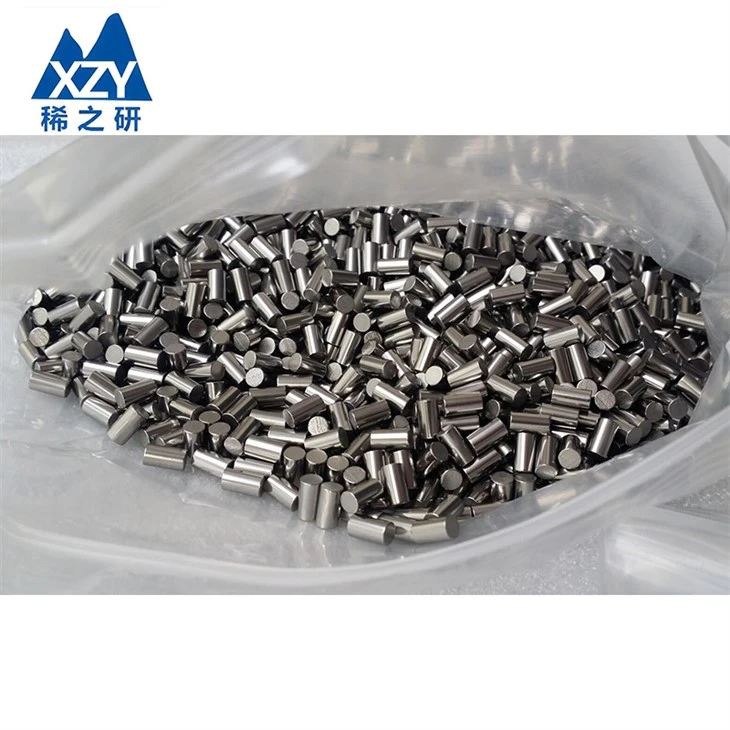
If you're in the market for pure tungsten wire and are thinking about which surface treatment would be best for your project, don't hesitate to reach out. Whether you need Tungsten Threaded Rod or Tungsten Fasteners, we can provide you with high - quality products and professional advice. We're here to help you find the perfect solution for your needs. So, feel free to contact us for more information and to start a procurement discussion.
References
- Smith, J. (2018). "Properties and Applications of Tungsten and Its Alloys". Metal Science Journal.
- Johnson, A. (2019). "Surface Treatment Technologies for High - Performance Metals". Engineering Materials Review.
- Brown, C. (2020). "Advanced Tungsten Products in Modern Industries". Industrial Materials Magazine.
