

Molybdenum alloy is a remarkable material known for its high melting point, excellent thermal conductivity, and outstanding mechanical properties. As a leading molybdenum alloy supplier, we understand the diverse needs of our customers who require molybdenum alloy in various shapes for different applications. In this blog post, we will explore the different methods of processing molybdenum alloy into various shapes, highlighting the advantages and considerations of each technique.
Understanding Molybdenum Alloy
Before delving into the processing methods, it's essential to understand the unique characteristics of molybdenum alloy. Molybdenum alloy combines molybdenum with other elements such as rhenium, lanthanum, or titanium to enhance its properties. For example, Molybdenum Rhenium Alloy offers improved ductility and strength at high temperatures, making it suitable for aerospace and electronics applications. Molybdenum Lanthanum Sheet provides excellent thermal stability and resistance to oxidation, making it ideal for use in heating elements and furnace components. TZM Rod, which contains titanium, zirconium, and molybdenum, offers high strength and creep resistance, making it suitable for high-temperature structural applications.
Processing Methods for Molybdenum Alloy
1. Forging
Forging is a traditional method of shaping molybdenum alloy. It involves applying compressive forces to the alloy at high temperatures to deform it into the desired shape. Forging can be performed using either open-die or closed-die techniques.
- Open-Die Forging: In open-die forging, the molybdenum alloy is placed between two flat or shaped dies, and the force is applied gradually to deform the material. This method is suitable for producing simple shapes such as bars, rods, and billets. Open-die forging allows for a high degree of flexibility in terms of the size and shape of the final product.
- Closed-Die Forging: Closed-die forging, also known as impression-die forging, involves placing the molybdenum alloy in a die cavity that has the desired shape of the final product. The die is then closed, and the force is applied to deform the material into the cavity. Closed-die forging is suitable for producing complex shapes with high precision and accuracy.
The advantages of forging include improved mechanical properties, such as increased strength and toughness, and the ability to produce large-sized components. However, forging requires specialized equipment and skilled operators, and it can be a time-consuming and expensive process.
2. Rolling
Rolling is another common method of processing molybdenum alloy into sheets, strips, and plates. It involves passing the molybdenum alloy between two rotating rolls to reduce its thickness and increase its length. Rolling can be performed at room temperature (cold rolling) or at elevated temperatures (hot rolling).

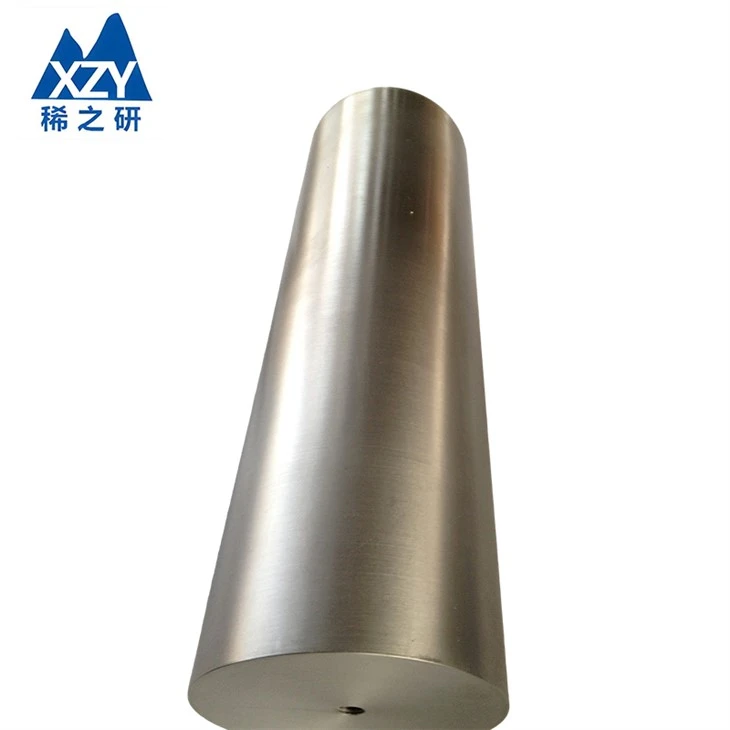
- Cold Rolling: Cold rolling is typically used to produce thin sheets and strips of molybdenum alloy with a smooth surface finish. The cold rolling process involves multiple passes through the rolls, with each pass reducing the thickness of the material by a small amount. Cold rolling can improve the mechanical properties of the molybdenum alloy, such as its strength and hardness.
- Hot Rolling: Hot rolling is used to produce thicker sheets and plates of molybdenum alloy. The hot rolling process involves heating the molybdenum alloy to a high temperature before passing it through the rolls. Hot rolling reduces the deformation resistance of the material, making it easier to shape. It also helps to eliminate internal stresses and improve the homogeneity of the material.
The advantages of rolling include high production efficiency, the ability to produce large quantities of material, and the ability to control the thickness and surface finish of the final product. However, rolling can cause some surface defects, such as scratches and cracks, and it may require additional processing steps to improve the surface quality.
3. Machining
Machining is a versatile method of processing molybdenum alloy into complex shapes. It involves using cutting tools to remove material from the molybdenum alloy to create the desired shape. Machining can be performed using various techniques, such as turning, milling, drilling, and grinding.
- Turning: Turning is a machining process in which the molybdenum alloy is rotated while a cutting tool is fed against it to remove material. Turning is commonly used to produce cylindrical shapes, such as rods and shafts.
- Milling: Milling is a machining process in which the cutting tool rotates while the molybdenum alloy is fed against it to remove material. Milling can be used to produce a wide range of shapes, including flat surfaces, slots, and pockets.
- Drilling: Drilling is a machining process in which a rotating drill bit is used to create holes in the molybdenum alloy. Drilling is commonly used to produce holes for bolts, screws, and other fasteners.
- Grinding: Grinding is a machining process in which an abrasive wheel is used to remove material from the molybdenum alloy to improve its surface finish and dimensional accuracy. Grinding can be used to produce flat surfaces, cylindrical surfaces, and complex shapes.
The advantages of machining include the ability to produce complex shapes with high precision and accuracy, and the ability to work with small-sized components. However, machining can be a time-consuming and expensive process, and it can generate a significant amount of waste material.
4. Extrusion
Extrusion is a process of forcing the molybdenum alloy through a die to create a continuous shape with a constant cross-section. Extrusion can be performed at room temperature (cold extrusion) or at elevated temperatures (hot extrusion).
- Cold Extrusion: Cold extrusion is typically used to produce small-sized components with a high degree of precision and accuracy. The cold extrusion process involves placing the molybdenum alloy in a die cavity and applying a force to push it through the die. Cold extrusion can improve the mechanical properties of the molybdenum alloy, such as its strength and hardness.
- Hot Extrusion: Hot extrusion is used to produce large-sized components with complex shapes. The hot extrusion process involves heating the molybdenum alloy to a high temperature before forcing it through the die. Hot extrusion reduces the deformation resistance of the material, making it easier to shape.
The advantages of extrusion include the ability to produce long, continuous shapes with a constant cross-section, and the ability to produce complex shapes with high precision and accuracy. However, extrusion requires specialized equipment and tooling, and it can be a time-consuming and expensive process.
5. Powder Metallurgy
Powder metallurgy is a process of producing molybdenum alloy components by compacting and sintering metal powders. The process involves the following steps:
- Powder Preparation: The first step in powder metallurgy is to prepare the molybdenum alloy powder. The powder can be produced by various methods, such as atomization, chemical reduction, or mechanical alloying.
- Compaction: The molybdenum alloy powder is then placed in a die cavity and compacted under high pressure to form a green compact. The green compact has the approximate shape of the final product but is not fully dense.
- Sintering: The green compact is then heated in a furnace at a high temperature to sinter the powder particles together. Sintering causes the powder particles to bond together, resulting in a fully dense component with the desired shape and properties.
The advantages of powder metallurgy include the ability to produce complex shapes with high precision and accuracy, the ability to use a wide range of materials, and the ability to control the microstructure and properties of the final product. However, powder metallurgy requires specialized equipment and processes, and it can be a time-consuming and expensive process.
Considerations for Processing Molybdenum Alloy
When processing molybdenum alloy into different shapes, several factors need to be considered to ensure the quality and performance of the final product. These factors include:
- Material Selection: The choice of molybdenum alloy depends on the specific application requirements, such as the operating temperature, mechanical properties, and chemical resistance. Different molybdenum alloys have different properties, and it's important to select the appropriate alloy for the intended use.
- Processing Conditions: The processing conditions, such as the temperature, pressure, and speed, can have a significant impact on the quality and performance of the final product. It's important to optimize the processing conditions to ensure that the molybdenum alloy is processed correctly and that the desired properties are achieved.
- Surface Finish: The surface finish of the molybdenum alloy can affect its performance in certain applications. For example, a smooth surface finish can reduce friction and wear, while a rough surface finish can increase the surface area for heat transfer. It's important to consider the surface finish requirements when selecting the processing method and to use appropriate finishing techniques, such as polishing or coating, to achieve the desired surface finish.
- Quality Control: Quality control is essential to ensure that the molybdenum alloy components meet the required specifications and standards. Quality control measures can include non-destructive testing, such as ultrasonic testing or X-ray inspection, and destructive testing, such as tensile testing or hardness testing.
Conclusion
Processing molybdenum alloy into different shapes requires a combination of specialized knowledge, advanced equipment, and skilled operators. As a leading molybdenum alloy supplier, we have the expertise and experience to provide high-quality molybdenum alloy products in various shapes and sizes to meet the diverse needs of our customers. Whether you need molybdenum alloy bars, sheets, rods, or custom-shaped components, we can help you find the right solution for your application.
If you are interested in purchasing molybdenum alloy products or have any questions about our processing capabilities, please feel free to contact us. Our team of experts is ready to assist you with your procurement needs and provide you with the best possible solutions.
References
- ASM Handbook, Volume 6: Welding, Brazing, and Soldering, ASM International, 1993.
- Metals Handbook, Volume 1: Properties and Selection: Irons, Steels, and High-Performance Alloys, ASM International, 1990.
- Molybdenum and Molybdenum Alloys, Edited by John F. Elliott, American Society for Metals, 1972.


