

Is pure tungsten magnetic? That's a question I get asked a lot as a supplier of pure tungsten products. Let's dive right into this topic and clear up any confusion.
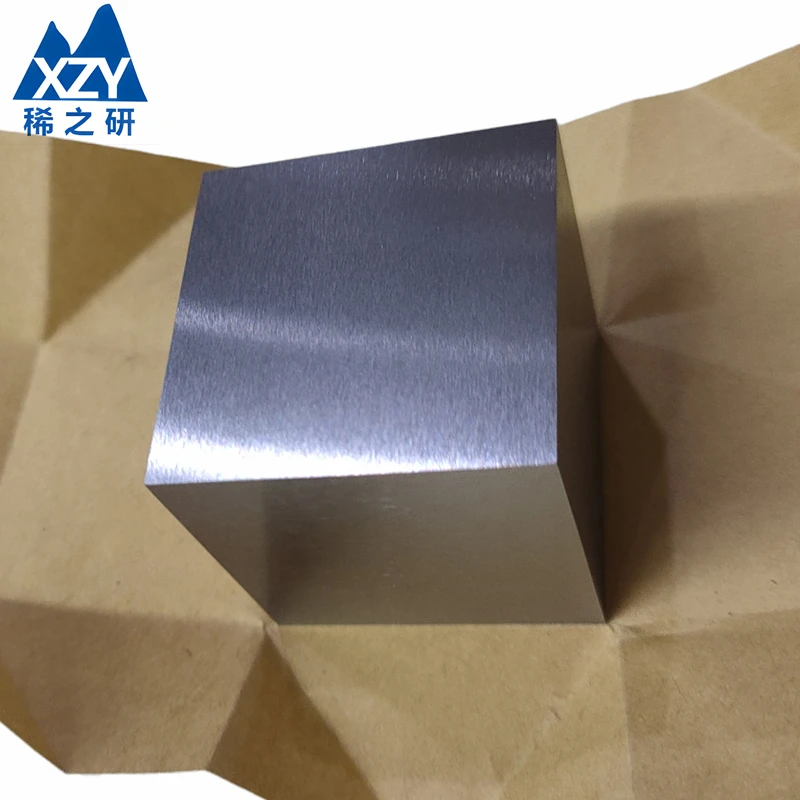
First off, let's understand what we mean by "pure tungsten." Pure tungsten refers to tungsten that's as close to 100% tungsten as possible, without a bunch of other elements mucking things up. We're talking about high - quality stuff here. And we offer a range of products made from this pure tungsten, like the Tungsten Sputtering Target, Pure Tungsten Block, and Pure Tungsten Heating Element.
Now, to answer the big question: Is pure tungsten magnetic? The short answer is no, pure tungsten is not magnetic in the way that iron, nickel, or cobalt are. These metals are what we call ferromagnetic, which means they can be strongly attracted to a magnet and can even be made into permanent magnets themselves.
Tungsten is what we call paramagnetic. This is a bit different from being ferromagnetic. Paramagnetic materials are only weakly attracted to a magnetic field. The reason for this lies in the atomic structure of tungsten. Atoms have electrons, and these electrons have a property called spin. In ferromagnetic materials, the spins of the electrons in the atoms can align in the same direction, creating a strong magnetic field. In tungsten, the electron spins don't align as easily or as strongly.
When you bring a magnet close to a piece of pure tungsten, you won't see the kind of dramatic attraction that you'd see with a ferromagnetic material. The attraction is so weak that you'd probably need some pretty sensitive equipment to even measure it.
Why does this matter? Well, in a lot of industries, the magnetic properties of a material can be a big deal. For example, in electronics, having a non - magnetic or weakly magnetic material can be really important. You don't want components to interfere with each other's magnetic fields. Tungsten's paramagnetic nature makes it a great choice for a lot of electronic applications.
Let's take the Tungsten Sputtering Target as an example. Sputtering is a process where atoms are ejected from a target material and deposited onto a substrate to create thin films. In many sputtering systems, having a non - ferromagnetic target is crucial. If the target was ferromagnetic, it could interact with the magnetic fields in the sputtering equipment, causing uneven deposition or other problems. Tungsten's paramagnetic property ensures that it can be used effectively in these systems without causing magnetic interference.
The Pure Tungsten Block is another product where the non - magnetic nature of tungsten is beneficial. These blocks are often used in high - temperature applications, like in furnaces. Since they're not strongly magnetic, they won't cause any unwanted magnetic interactions in the furnace environment.
And then there's the Pure Tungsten Heating Element. Heating elements need to be able to heat up without being affected by magnetic fields. Tungsten's paramagnetic property allows it to function well in these situations, providing a stable and efficient source of heat.
But it's important to note that the magnetic properties of tungsten can change if it's alloyed with other elements. If you add ferromagnetic elements like iron or nickel to tungsten, the resulting alloy can become more magnetic. That's why, as a supplier, we make sure to provide pure tungsten products that have the consistent magnetic properties that our customers expect.

In some scientific experiments, the weak magnetic property of tungsten can actually be useful. Scientists can use it as a reference material to study magnetic fields because of its predictable and weak response.
Another aspect to consider is the temperature. The paramagnetic behavior of tungsten can also be affected by temperature. As the temperature changes, the way the electrons in the tungsten atoms behave can change slightly, which in turn can affect its magnetic properties. However, these changes are still relatively small compared to the differences between ferromagnetic and paramagnetic materials.
So, if you're in an industry where magnetic properties matter, and you're looking for a material that's either non - magnetic or only weakly magnetic, pure tungsten is a great option. Whether you need a Tungsten Sputtering Target for your thin - film deposition process, a Pure Tungsten Block for high - temperature applications, or a Pure Tungsten Heating Element for your heating system, we've got you covered.
If you're interested in learning more about our pure tungsten products or have any questions about their magnetic properties or other characteristics, don't hesitate to reach out. We're here to help you find the right solution for your specific needs. Whether you're a small - scale researcher or a large - scale industrial manufacturer, we can provide you with high - quality pure tungsten products that meet your requirements.
In conclusion, pure tungsten is paramagnetic, meaning it's only weakly attracted to a magnetic field. This property makes it a versatile material with a wide range of applications, especially in industries where magnetic interference needs to be minimized. So, if you're in the market for pure tungsten products, give us a shout, and let's start a conversation about how we can work together.
References
- "Introduction to Solid State Physics" by Charles Kittel
- Various scientific research papers on the magnetic properties of metals


