

Hey there! As a supplier of pure tungsten sheets, I often get asked about the emissivity of these sheets. So, I thought I'd take a few minutes to break it down for you in a way that's easy to understand.
First off, let's talk about what emissivity is. Emissivity is a measure of how well a material emits thermal radiation compared to a perfect emitter, which is known as a blackbody. A blackbody has an emissivity of 1, meaning it emits 100% of the radiation it can theoretically emit at a given temperature. Real - world materials have emissivities between 0 and 1.
Now, when it comes to pure tungsten sheets, their emissivity can vary depending on a few factors. One of the main factors is the surface condition of the sheet. A polished pure tungsten sheet will have a different emissivity than a rough or oxidized one.
Polished pure tungsten typically has a relatively low emissivity. At room temperature, the emissivity of polished tungsten can be around 0.03 - 0.05. This low emissivity means that it doesn't radiate heat very efficiently. It's kind of like a shiny mirror that reflects a lot of the heat back instead of letting it escape.
However, as the surface of the tungsten sheet becomes rougher or gets oxidized, the emissivity increases. Oxidized tungsten can have an emissivity of up to 0.3 - 0.4. The rough or oxidized surface provides more sites for the emission of thermal radiation, allowing the material to radiate heat more effectively.
Another factor that affects the emissivity of pure tungsten sheets is temperature. As the temperature rises, the emissivity of tungsten also changes. Generally, as the temperature increases, the emissivity of tungsten goes up. At high temperatures, say around 2000 - 3000 K, the emissivity of tungsten can be in the range of 0.3 - 0.45. This is important in applications where tungsten is used at high temperatures, like in incandescent light bulbs or some high - temperature furnaces.
So, why does the emissivity of pure tungsten sheets matter? Well, it has a big impact on how these sheets perform in different applications.
In the field of lighting, for example, incandescent light bulbs use tungsten filaments. The emissivity of the tungsten filament affects how efficiently it converts electrical energy into light. A higher emissivity at high temperatures means that more of the electrical energy is radiated as visible light, making the bulb more efficient (although incandescent bulbs are still relatively inefficient compared to other lighting technologies).
In high - temperature furnaces, the emissivity of pure tungsten sheets used as heating elements or linings is crucial. A higher emissivity allows for better heat transfer within the furnace, which can lead to more uniform heating and potentially lower energy consumption.
As a supplier of pure tungsten sheets, we offer a range of products to meet different needs. If you're looking for a product with a low emissivity for applications where heat retention is important, our polished pure tungsten sheets are a great choice. On the other hand, if you need a sheet with a higher emissivity for efficient heat transfer, our roughened or slightly oxidized sheets might be more suitable.
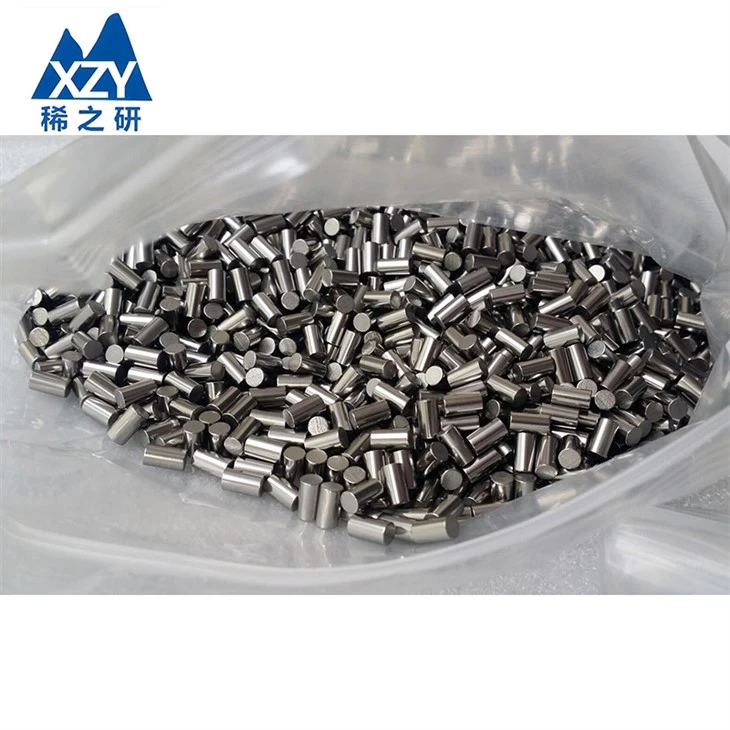

We also have other pure tungsten products that you might be interested in. For example, we offer Pure Tungsten Crucible, which are used in high - temperature melting and chemical reactions. These crucibles are made from high - quality pure tungsten, ensuring excellent thermal stability and resistance to chemical corrosion.
Another product we have is Tungsten Balance Weight. Tungsten's high density makes it an ideal material for balance weights in various industries, such as aerospace, automotive, and sports equipment.
And if you're in need of a tubular form of pure tungsten, we have Pure Tungsten Tube. These tubes are used in applications like electron guns, vacuum tubes, and some high - temperature sensors.
If you're in the market for pure tungsten sheets or any of our other tungsten products, we'd love to hear from you. Whether you're a researcher working on a high - tech project or a manufacturer looking for reliable materials, we can provide you with the right product and support. Just reach out to us, and we'll start the conversation about your specific requirements.
In conclusion, the emissivity of pure tungsten sheets is a complex but important property. It depends on factors like surface condition and temperature, and it plays a key role in the performance of tungsten in various applications. As a supplier, we're here to help you understand these properties and choose the right product for your needs. So, don't hesitate to get in touch if you have any questions or if you're ready to make a purchase.
References
- Incropera, F. P., & DeWitt, D. P. (2002). Fundamentals of Heat and Mass Transfer. John Wiley & Sons.
- Touloukian, Y. S., & DeWitt, D. P. (1972). Thermal Radiative Properties. IFI/Plenum.


