

The discovery and utilization of pure tungsten represent a fascinating journey through the annals of scientific and industrial history. As a supplier of pure tungsten, I am deeply intrigued by the story behind this remarkable metal and its diverse applications. In this blog, I will delve into the history of the discovery and use of pure tungsten, exploring its properties, extraction methods, and the wide range of industries that rely on it.
Early Discoveries and Recognition
The story of tungsten begins in the 18th century, during a period of intense scientific exploration and discovery. In 1781, Swedish chemist Carl Wilhelm Scheele analyzed a mineral known as scheelite and identified a new acid, which he named tungstic acid. This discovery laid the foundation for the subsequent isolation of tungsten. Four years later, in 1785, Spanish chemists Juan José and Fausto Elhuyar successfully isolated tungsten from wolframite, another tungsten-bearing mineral. They named the new element "wolfram," a term derived from the mineral's name, and it is still used in many countries, including Germany and Sweden. In English-speaking countries, however, the name "tungsten" prevailed, which is derived from the Swedish words "tung" (heavy) and "sten" (stone), reflecting its high density.
Physical and Chemical Properties
Tungsten is a remarkable metal with a unique set of physical and chemical properties that make it highly valuable in a wide range of applications. It has the highest melting point of all metals, at 3,422°C (6,192°F), and the lowest vapor pressure at temperatures above 1,650°C (3,002°F). This exceptional heat resistance makes tungsten ideal for use in high-temperature applications, such as incandescent light bulbs, vacuum tubes, and welding electrodes.
In addition to its high melting point, tungsten also has a very high density, 19.25 g/cm³, which is almost twice that of lead. This density gives tungsten excellent radiation shielding properties, making it useful in nuclear medicine, radiation therapy, and other applications where protection from ionizing radiation is required.
Tungsten is also known for its high tensile strength, which is the ability of a material to resist breaking under tension. This property makes tungsten suitable for use in high-stress applications, such as aerospace components, high-speed cutting tools, and electrical contacts.
Extraction and Refining
The extraction of tungsten from its ores is a complex and energy-intensive process that involves several steps. The most common tungsten ores are wolframite (Fe,Mn)WO₄ and scheelite (CaWO₄). The first step in the extraction process is to crush and grind the ore to a fine powder. The powdered ore is then concentrated using various methods, such as gravity separation, magnetic separation, and flotation, to remove impurities and increase the tungsten content.
Once the ore has been concentrated, it is typically roasted in air to convert the tungsten minerals into tungsten oxide (WO₃). The tungsten oxide is then reduced to metallic tungsten using a reducing agent, such as hydrogen or carbon. This reduction process is usually carried out in a high-temperature furnace, where the tungsten oxide reacts with the reducing agent to produce pure tungsten metal.
After the reduction process, the tungsten metal is often further refined to remove any remaining impurities and to improve its purity and quality. This refining process may involve techniques such as electron beam melting, zone refining, or chemical purification.
Early Applications
The early applications of tungsten were primarily in the field of incandescent lighting. In 1904, Hungarian inventors Sándor Just and Franjo Hanaman patented a method for producing ductile tungsten wire, which could be used as a filament in incandescent light bulbs. This breakthrough led to the widespread adoption of tungsten filaments in light bulbs, replacing the carbon filaments that were previously used. Tungsten filaments had a much longer lifespan and produced a brighter, more efficient light than carbon filaments, making them the standard for incandescent lighting for many years.

Another early application of tungsten was in the field of electrical engineering. Tungsten's high melting point and excellent electrical conductivity made it an ideal material for use in electrical contacts, switches, and other components. Tungsten was also used in the production of vacuum tubes, which were widely used in early electronic devices such as radios, televisions, and computers.
Modern Applications
Today, tungsten is used in a wide range of industries and applications, thanks to its unique properties and versatility. One of the most significant modern applications of tungsten is in the aerospace and defense industries. Tungsten's high strength, high density, and excellent heat resistance make it an ideal material for use in aircraft engines, missiles, and other aerospace components. Tungsten is also used in the production of armor-piercing ammunition, where its high density and hardness allow it to penetrate thick armor plates.
In the automotive industry, tungsten is used in the production of high-performance engine components, such as valves, pistons, and connecting rods. Tungsten's high strength and heat resistance make these components more durable and reliable, allowing engines to operate at higher temperatures and pressures.
Tungsten is also widely used in the manufacturing industry, particularly in the production of cutting tools and dies. Tungsten carbide, a compound of tungsten and carbon, is one of the hardest materials known and is used in the production of high-speed cutting tools, drill bits, and other industrial tools. Tungsten is also used in the production of dies for metal forming and stamping operations, where its high hardness and wear resistance allow it to withstand the high pressures and forces involved in these processes.
In the medical field, tungsten is used in a variety of applications, including radiation shielding, X-ray targets, and medical implants. Tungsten's high density and excellent radiation shielding properties make it an ideal material for use in lead aprons and other protective equipment used in medical imaging and radiation therapy. Tungsten is also used as a target material in X-ray tubes, where it emits X-rays when bombarded with high-energy electrons.
Our Offerings as a Pure Tungsten Supplier
As a supplier of pure tungsten, we offer a wide range of high-quality tungsten products to meet the diverse needs of our customers. Our product portfolio includes Tungsten Fasteners, which are used in a variety of applications, including aerospace, automotive, and industrial manufacturing. Our tungsten fasteners are made from pure tungsten or tungsten alloys and are available in a variety of sizes and shapes to suit different requirements.
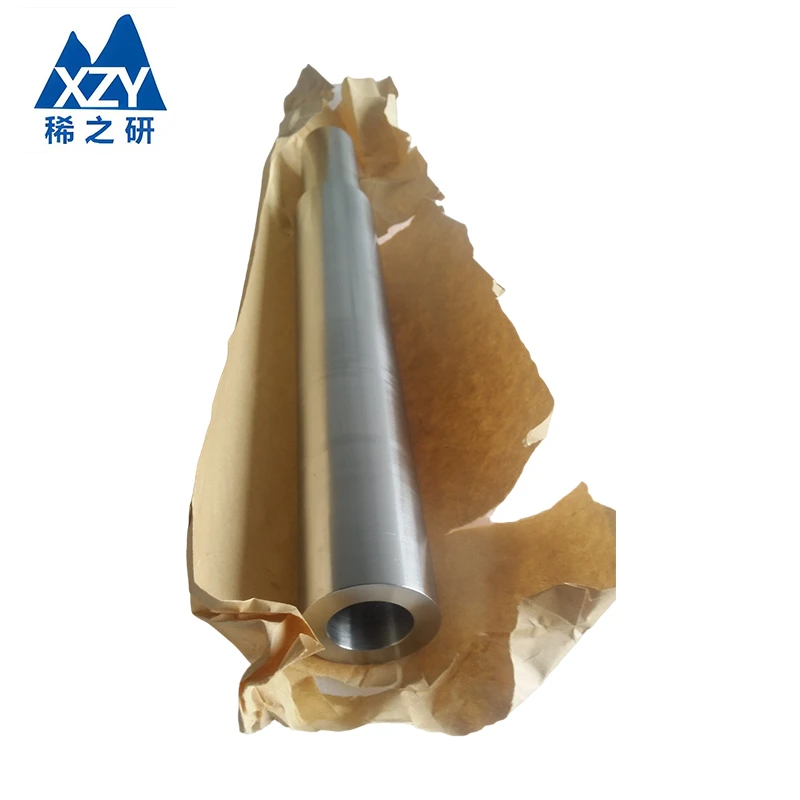
We also offer Pure Tungsten Tube, which is used in a variety of high-temperature and high-stress applications, such as heating elements, vacuum tubes, and furnace components. Our pure tungsten tubes are made from high-purity tungsten and are available in a variety of diameters and wall thicknesses to meet different specifications.
In addition to our tungsten fasteners and tubes, we also offer Pure Tungsten Heating Element, which are used in a variety of industrial and scientific applications, such as heat treatment, melting, and evaporation. Our pure tungsten heating elements are made from high-purity tungsten and are available in a variety of shapes and sizes to suit different heating requirements.
Conclusion
The history of the discovery and use of pure tungsten is a testament to the power of human ingenuity and the importance of scientific research. From its early discovery in the 18th century to its widespread use in modern industries, tungsten has played a crucial role in shaping the world we live in today. As a supplier of pure tungsten, we are proud to be part of this rich history and are committed to providing our customers with the highest quality tungsten products and services.
If you are interested in learning more about our pure tungsten products or would like to discuss your specific requirements, please do not hesitate to contact us. We look forward to the opportunity to work with you and to help you find the perfect tungsten solution for your needs.
References
- Emsley, John. "Tungsten." Nature's Building Blocks: An A-Z Guide to the Elements. Oxford University Press, 2011.
- King, R. Bruce. "Tungsten." Encyclopedia of Chemical Elements. Facts On File, 2003.
- Lide, David R., ed. "Tungsten." CRC Handbook of Chemistry and Physics. CRC Press, 2004.


