

Hey there! As a supplier of molybdenum plates, I often get asked about the roughness requirement for molybdenum plates. So, I thought I'd write this blog to share some insights on this topic.
First off, let's understand what roughness is. In simple terms, roughness refers to the microscopic irregularities on the surface of a material. For molybdenum plates, these irregularities can affect how the plate performs in different applications.
The roughness requirement for molybdenum plates can vary widely depending on the specific use of the plate. For example, in some high - precision electronic applications, extremely smooth surfaces are needed. The roughness here might be specified in terms of Ra (arithmetical mean deviation of the profile), and values could be as low as 0.025 to 0.1 micrometers. This is because the smooth surface can ensure better electrical contact, reduce signal interference, and improve the overall performance of the electronic components.
On the other hand, in applications where the molybdenum plate is used for structural purposes or in environments where it is not in contact with sensitive components, the roughness requirement can be more lenient. Ra values in the range of 0.8 to 3.2 micrometers might be acceptable. These rougher surfaces can actually be beneficial in some cases. For instance, a slightly rough surface can provide better adhesion when the plate is being coated or bonded with other materials.
Now, let's talk about how we control the roughness of molybdenum plates. At our company, we use a combination of advanced manufacturing processes. One of the key steps is the machining process. We use high - precision milling and grinding machines to achieve the desired surface finish. The choice of cutting tools also plays a crucial role. Tools with sharp edges and appropriate geometries can help create smoother surfaces.
After machining, we often perform a finishing process. This can include polishing or lapping. Polishing uses abrasive materials to remove the tiny peaks on the surface, gradually reducing the roughness. Lapping, on the other hand, is a more precise process that can achieve extremely smooth surfaces. It involves rubbing the plate against a lapping plate with a fine abrasive slurry.
Another factor that affects the roughness is the quality of the raw molybdenum material. High - purity molybdenum tends to have a more uniform structure, which makes it easier to achieve a consistent surface finish. We source our molybdenum from reliable suppliers to ensure the starting material meets our quality standards.
In addition to the manufacturing processes, we also have strict quality control measures in place. We use surface profilometers to measure the roughness of the plates at multiple points. This helps us ensure that the plates meet the specified roughness requirements. If a plate does not meet the standards, we take corrective actions, such as re - machining or additional finishing processes.
Let's take a look at some of the common applications of molybdenum plates and their corresponding roughness requirements:
1. Vacuum Furnaces
In vacuum furnaces, molybdenum plates are used as heating elements or as structural components. The roughness requirement here is relatively moderate. A surface with an Ra value of around 1.6 micrometers is usually sufficient. This roughness allows for good heat transfer and also provides enough surface area for any coatings or insulation materials that might be applied.
2. Semiconductor Manufacturing
Semiconductor manufacturing is a highly precise industry. Molybdenum plates used in semiconductor equipment, such as in sputtering targets, require extremely smooth surfaces. Ra values of less than 0.1 micrometers are often required. This smoothness is essential to ensure uniform deposition of thin films and to prevent any contamination that could affect the performance of the semiconductors.
3. Glass Melting Industry
In the glass melting industry, molybdenum plates are used as electrodes. The roughness requirement here is not as strict as in semiconductor applications. An Ra value of 0.8 to 2.5 micrometers is typically acceptable. The rougher surface can help with the adhesion of the molten glass and also provides some resistance to corrosion.
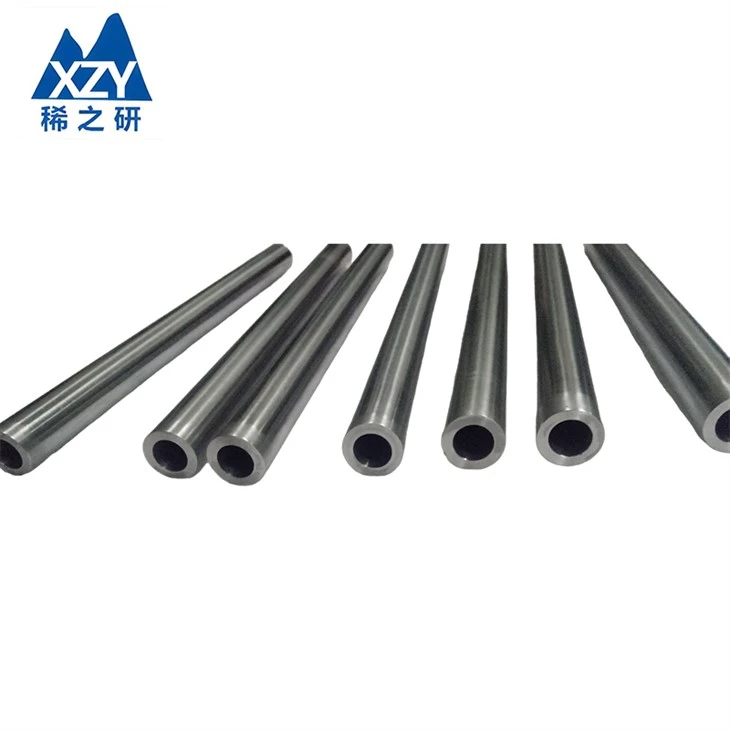

As a molybdenum plate supplier, we offer a wide range of products to meet different roughness requirements. If you're interested in our pure molybdenum products, you can check out our Pure Molybdenum Disc, Wire Cutting Molybdenum Wire, and Pure Molybdenum Tube.
We understand that every customer has unique needs when it comes to the roughness of molybdenum plates. That's why we're always ready to work closely with you to provide customized solutions. Whether you need a plate with a super - smooth surface for a high - tech application or a slightly rougher one for a more general use, we've got you covered.
If you're in the market for molybdenum plates and have specific roughness requirements, don't hesitate to reach out to us. We can discuss your needs in detail, provide samples for testing, and offer competitive pricing. Let's work together to find the perfect molybdenum plate solution for your project.
References
- "Surface Engineering for Advanced Materials" by John Wiley & Sons
- "Handbook of Molybdenum and Its Alloys" by ASM International
