

Hey there! As a supplier of molybdenum rods, I often get asked about coating options for these bad boys. Molybdenum rods are pretty awesome on their own, but sometimes you might want to give them an extra edge with a coating. So, let's dive into the world of molybdenum rod coatings and see what's out there.
Why Coat Molybdenum Rods?
First off, why would you even want to coat a molybdenum rod? Well, there are a few good reasons. Molybdenum is known for its high melting point, excellent thermal conductivity, and good mechanical properties at high temperatures. But in some environments, it can face challenges like oxidation, corrosion, or wear. A coating can help protect the rod from these issues, extend its lifespan, and improve its performance.
Types of Coatings for Molybdenum Rods
Ceramic Coatings
Ceramic coatings are a popular choice for molybdenum rods. They offer high hardness, excellent wear resistance, and good thermal insulation. One of the most common ceramic coatings is alumina (Al₂O₃). Alumina coatings can protect the molybdenum rod from oxidation at high temperatures. They form a dense, protective layer that prevents oxygen from reaching the molybdenum surface.
Another ceramic option is zirconia (ZrO₂). Zirconia coatings have high fracture toughness and can withstand thermal shock. This makes them suitable for applications where the rod is exposed to rapid temperature changes.
Metal Coatings
Metal coatings can also be applied to molybdenum rods. For example, nickel coatings are often used. Nickel has good corrosion resistance and can provide a smooth, protective surface. It can also improve the rod's solderability, which is useful in electronic applications.

Titanium nitride (TiN) is another metal coating that's widely used. TiN coatings are hard, wear-resistant, and have a low friction coefficient. They're often used in cutting tools and other applications where reducing friction and wear is important.
Polymer Coatings
Polymer coatings offer a different set of properties. They can provide excellent chemical resistance, electrical insulation, and flexibility. For example, polytetrafluoroethylene (PTFE) coatings are known for their non-stick properties. They can be used in applications where the rod needs to be easy to clean or where it comes into contact with sticky substances.
Epoxy coatings are also popular. Epoxy coatings can be formulated to have high adhesion, good chemical resistance, and excellent mechanical properties. They're often used for protecting molybdenum rods in corrosive environments.
Application Methods
There are several methods for applying coatings to molybdenum rods.
Physical Vapor Deposition (PVD)
PVD is a widely used method for applying thin coatings. In PVD, the coating material is vaporized in a vacuum chamber and then deposited onto the molybdenum rod surface. This method allows for precise control of the coating thickness and composition. It can produce high-quality, uniform coatings with good adhesion.
Chemical Vapor Deposition (CVD)
CVD is another technique for coating molybdenum rods. In CVD, chemical reactions occur in the gas phase to form the coating on the rod surface. CVD coatings can have excellent adhesion and can be applied at high temperatures, which can result in better coating quality. However, CVD processes are often more complex and expensive than PVD.
Spray Coating
Spray coating is a simple and cost-effective method. It involves spraying the coating material onto the molybdenum rod surface. This method can be used for both thick and thin coatings. Spray coating is suitable for large-scale production and can be used to apply a variety of coating materials, including ceramics, metals, and polymers.
Considerations When Choosing a Coating
When choosing a coating for your molybdenum rod, there are several factors to consider.
Application Requirements
The first thing to think about is the application. What kind of environment will the rod be exposed to? If it's a high-temperature application, you'll need a coating that can withstand the heat. If it's a corrosive environment, a coating with good chemical resistance is essential.
Coating Thickness
The thickness of the coating is also important. A thicker coating may provide better protection, but it can also affect the rod's dimensions and mechanical properties. You need to find a balance between protection and maintaining the rod's original characteristics.
Compatibility
The coating must be compatible with the molybdenum rod. Some coatings may react with the molybdenum at high temperatures or in certain chemical environments. Make sure to choose a coating that won't cause any adverse reactions.
Our Molybdenum Rod Offerings
As a molybdenum rod supplier, we offer a wide range of high-quality molybdenum rods. In addition to the rods themselves, we can also provide coating services. Whether you need a ceramic, metal, or polymer coating, we have the expertise and equipment to apply it to your rod.
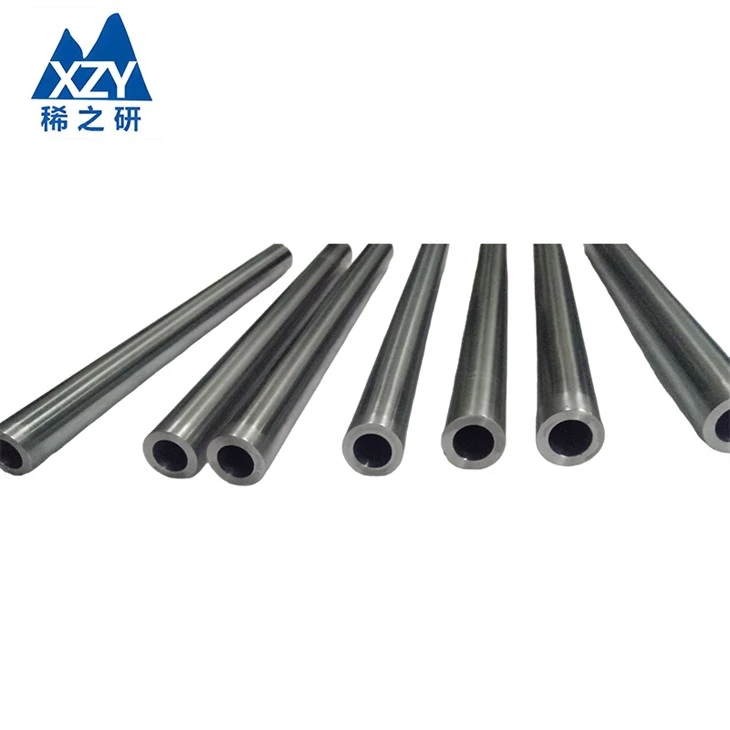
We also offer other molybdenum products, such as Pure Molybdenum Tube, Molybdenum Spray Wire, and Molybdenum Fasteners. These products are all made from high-purity molybdenum and can be customized to meet your specific requirements.
Contact Us for Coating and Procurement
If you're interested in coating your molybdenum rods or purchasing our molybdenum products, don't hesitate to reach out. We're here to help you find the best coating solution for your application and provide you with top-quality molybdenum products. Whether you're a small business or a large corporation, we can work with you to meet your needs.
References
-ASM Handbook Volume 5: Surface Engineering. ASM International.
-Schwartz, M. H. (2006). Handbook of Thermal Spray Technology. ASM International.
-Bhushan, B. (2013). Tribology of Solid Surfaces, Coatings, and Lubricants. Wiley.


