

What is the hardness of pure tungsten sheet?
As a supplier of pure tungsten sheets, I often get asked about the hardness of these remarkable materials. Tungsten, known for its unique properties, is a metal that has fascinated scientists, engineers, and manufacturers for decades. In this blog post, I'll delve into the hardness of pure tungsten sheets, exploring what it means, how it's measured, and why it matters in various applications.
To understand the hardness of pure tungsten sheets, we first need to grasp the concept of hardness itself. Hardness refers to a material's resistance to permanent deformation, such as scratching, indentation, or abrasion. There are several ways to measure hardness, each suited to different types of materials and applications. The most common hardness scales include the Rockwell, Brinell, and Vickers scales.
When it comes to pure tungsten, its hardness is quite impressive. Tungsten has a high melting point of 3,422 degrees Celsius (6,192 degrees Fahrenheit), which is the highest of all metals. This high melting point is closely related to its hardness. At room temperature, pure tungsten has a Vickers hardness of around 300 - 400 HV. This value can vary slightly depending on factors such as the purity of the tungsten, the manufacturing process, and any subsequent heat treatment.
The high hardness of pure tungsten sheets makes them ideal for a wide range of applications. One of the most well - known uses is in the production of Pure Tungsten Heating Element. Tungsten's hardness allows these heating elements to withstand high temperatures without deforming or losing their shape. In high - temperature furnaces, for example, tungsten heating elements can operate at extremely high temperatures for long periods, providing reliable and efficient heating.
Another important application is in the field of sputtering. Tungsten Sputtering Target are used to deposit thin films of tungsten onto various substrates. The hardness of the tungsten sheet ensures that the sputtering target maintains its integrity during the sputtering process. It can resist the high - energy ion bombardment, which is crucial for achieving a consistent and high - quality thin - film deposition.
In the aerospace and automotive industries, Tungsten Fasteners made from pure tungsten sheets are highly valued. The hardness of tungsten allows these fasteners to provide strong and reliable connections. They can withstand high stress and vibration, making them suitable for use in critical components where safety and durability are of utmost importance.
The manufacturing process of pure tungsten sheets also plays a significant role in determining their hardness. Typically, tungsten powder is first compacted and sintered to form a billet. This billet is then further processed through rolling or forging to produce sheets of the desired thickness. During these processes, the grain structure of the tungsten is refined, which can increase its hardness. Heat treatment can also be used to adjust the hardness and other properties of the tungsten sheet. For example, annealing can be used to relieve internal stresses and improve the ductility of the sheet, while quenching can increase its hardness.

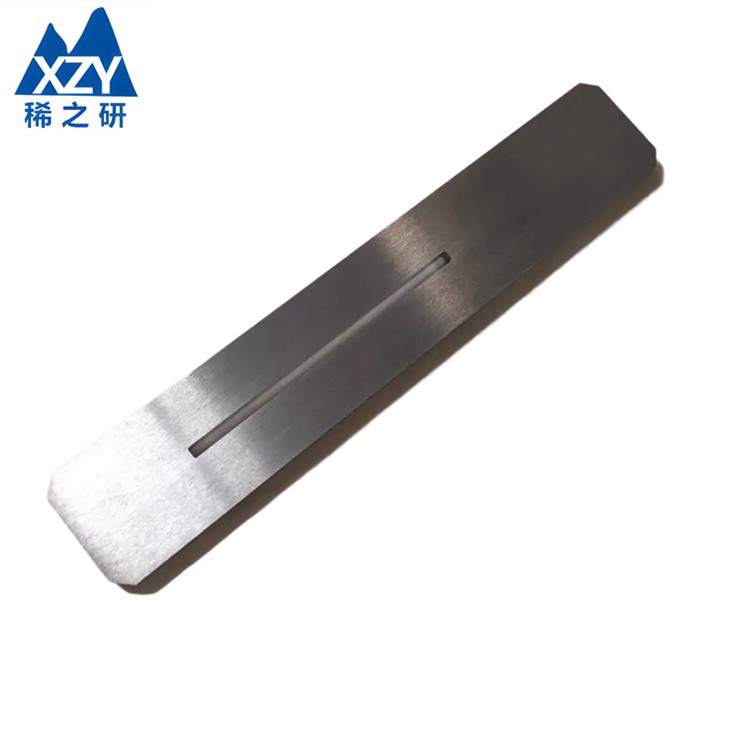
However, working with pure tungsten sheets can be challenging due to their high hardness. Machining tungsten requires specialized tools and techniques. High - speed steel or carbide tools are commonly used, and cutting speeds and feeds need to be carefully controlled to avoid excessive tool wear. Grinding and polishing of tungsten sheets also require specific abrasives and processes to achieve a smooth surface finish.
The purity of the tungsten is another factor that affects its hardness. High - purity tungsten, typically with a purity of 99.95% or higher, tends to have more consistent and predictable hardness properties. Impurities can act as weak points in the crystal structure of the tungsten, reducing its overall hardness and potentially affecting its performance in applications. As a supplier, we take great care in ensuring the purity of our tungsten sheets through strict quality control measures during the manufacturing process.
When considering the hardness of pure tungsten sheets in an application, it's also important to take into account the operating environment. For example, in corrosive environments, the hardness of the tungsten sheet may be affected by chemical reactions. Surface treatments or coatings can be applied to protect the tungsten sheet from corrosion and maintain its hardness over time.
In addition to hardness, other properties of pure tungsten sheets, such as density, electrical conductivity, and thermal conductivity, also contribute to their suitability for different applications. Tungsten has a very high density, which makes it useful in applications where weight is a critical factor, such as in balancing weights for aerospace components. Its excellent electrical conductivity makes it a preferred material for electrical contacts and wiring in high - temperature and high - power applications.
As a supplier of pure tungsten sheets, we understand the importance of providing high - quality products that meet the specific needs of our customers. Whether you're in the electronics, aerospace, or manufacturing industry, our pure tungsten sheets offer the hardness and other properties required for your applications. We can provide sheets in various sizes and thicknesses, and we're also able to offer customized solutions based on your specific requirements.
If you're interested in purchasing pure tungsten sheets for your project, we invite you to contact us for a detailed discussion. Our team of experts is ready to assist you in selecting the right product and answering any questions you may have about the hardness, manufacturing process, or application of pure tungsten sheets. We believe that our high - quality pure tungsten sheets, combined with our excellent customer service, will make us your reliable partner in your business.
References
- "Tungsten: Properties, Chemistry, Technology of the Element, Alloys, and Chemical Compounds" by R. Kieffer and F. Benesovsky
- "Materials Science and Engineering: An Introduction" by William D. Callister Jr. and David G. Rethwisch


