

As a supplier of Pure Tungsten Sheet, I often get asked about the technical specifications and capabilities of our products. One question that comes up quite frequently is: "What is the maximum bending angle for pure tungsten sheet?" In this blog post, I'll delve into this topic, exploring the factors that influence the bending angle of pure tungsten sheets and providing some insights based on our experience in the industry.
Understanding Pure Tungsten Sheet
Before we discuss the maximum bending angle, let's briefly understand what pure tungsten sheet is. Tungsten is a remarkable metal known for its high melting point (the highest of all metals at 3,422°C), excellent hardness, and good electrical conductivity. Pure tungsten sheets are made from this extraordinary metal, and they find applications in a wide range of industries, including electronics, aerospace, and high-temperature furnaces.
Our Pure Tungsten Sheet products are carefully manufactured to meet the highest quality standards. We use advanced production techniques to ensure that the sheets have consistent thickness, smooth surfaces, and excellent mechanical properties.
Factors Affecting the Bending Angle of Pure Tungsten Sheet
The maximum bending angle of a pure tungsten sheet is not a fixed value; it is influenced by several factors. Here are some of the key factors:
1. Thickness of the Sheet
One of the most significant factors affecting the bending angle is the thickness of the tungsten sheet. Generally, thinner sheets can be bent to a larger angle compared to thicker ones. This is because thinner sheets have less material to resist the bending force, making them more flexible. For example, a 0.1 mm thick pure tungsten sheet may be able to withstand a bending angle of up to 90 degrees or more, while a 1 mm thick sheet may only be bent to a much smaller angle, perhaps around 30 - 45 degrees without cracking.
2. Grain Structure
The grain structure of the tungsten sheet also plays a crucial role. Tungsten sheets with a fine-grained structure are often more ductile and can be bent to a larger angle than those with a coarse-grained structure. During the manufacturing process, we can control the grain size through various methods such as heat treatment and rolling. By optimizing the grain structure, we can improve the bending performance of our pure tungsten sheets.
3. Temperature
Temperature has a significant impact on the bending behavior of tungsten. Tungsten becomes more ductile at higher temperatures. When the sheet is heated, the atoms in the metal have more energy and can move more freely, reducing the brittleness and allowing for greater deformation. For instance, at room temperature, tungsten is relatively brittle, but when heated to around 800 - 1000°C, it becomes much more malleable, and the maximum bending angle can be significantly increased.
4. Bending Method
The method used to bend the tungsten sheet also affects the maximum bending angle. Different bending methods, such as free bending, air bending, and bottom bending, apply different forces and stress distributions to the sheet. For example, air bending is a more gentle method that can often achieve a larger bending angle compared to bottom bending, which applies a more concentrated force and may cause the sheet to crack at a smaller angle.
Testing and Determining the Maximum Bending Angle
To determine the maximum bending angle for a specific pure tungsten sheet, we conduct a series of tests. We use specialized equipment to apply a controlled bending force to the sheet while monitoring the stress and strain. During the test, we gradually increase the bending angle until the sheet shows signs of cracking or failure.
We also take into account the application requirements of the customer. For some applications, a small bending angle may be sufficient, while for others, a larger angle may be needed. Based on the test results and the customer's needs, we can provide customized solutions to ensure that the tungsten sheet meets the specific bending requirements.
Applications of Bent Pure Tungsten Sheet
Bent pure tungsten sheets have a wide range of applications. In the electronics industry, they are used in the manufacture of components such as cathode supports and electrodes. The ability to bend the sheets allows for the creation of complex shapes that are essential for the proper functioning of these electronic devices.
In the aerospace industry, bent tungsten sheets are used in high-temperature components such as rocket nozzles and heat shields. The high melting point and excellent mechanical properties of tungsten make it an ideal material for these applications, and the ability to bend the sheets enables the production of parts with the required shapes and dimensions.

Related Products
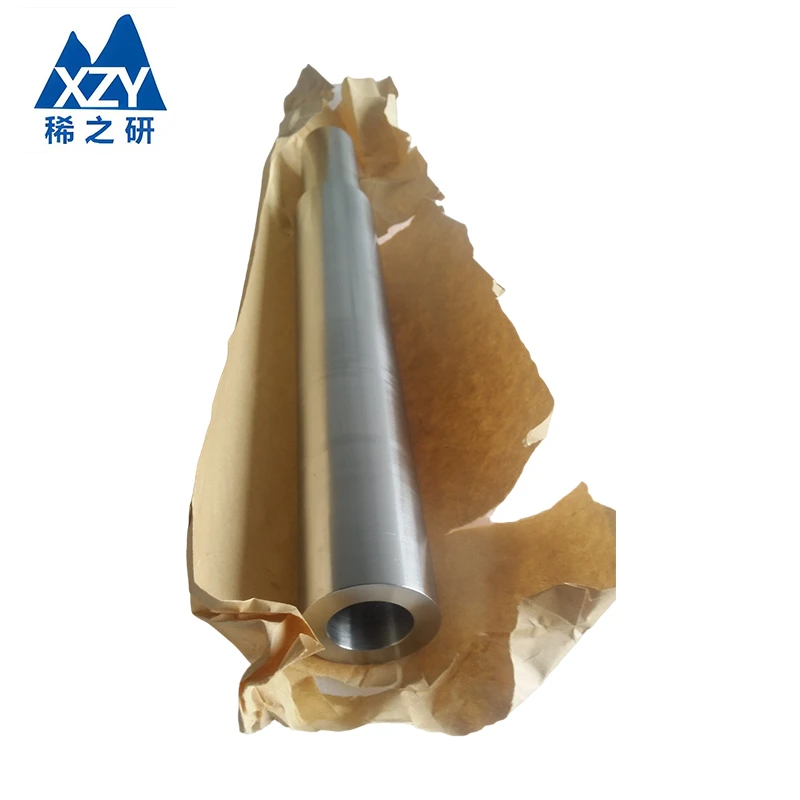
In addition to our Pure Tungsten Sheet, we also offer other high-quality tungsten products. Our Pure Tungsten Tube is widely used in applications where a tubular shape is required, such as in vacuum furnaces and high-power lamps. The tubes are manufactured with high precision and have excellent mechanical and thermal properties.
Another product in our portfolio is the Tungsten Sputtering Target. These targets are used in thin-film deposition processes to create high-quality tungsten films on various substrates. The sputtering targets are made from high-purity tungsten and are carefully designed to ensure uniform deposition and excellent performance.
Contact Us for Procurement
If you are interested in our pure tungsten products, including pure tungsten sheets, tubes, or sputtering targets, we would be more than happy to discuss your requirements. Our team of experts can provide you with detailed technical information, help you select the right product for your application, and offer competitive pricing. Whether you need a small quantity for research purposes or a large order for industrial production, we can meet your needs. Contact us today to start the procurement process and take advantage of our high-quality tungsten products.
References
- "Tungsten: Properties, Chemistry, Technology of the Element, Alloys, and Chemical Compounds" by R. Kieffer and F. Benesovsky.
- "Materials Science and Engineering: An Introduction" by William D. Callister Jr. and David G. Rethwisch.
- Research papers on the mechanical properties of tungsten published in scientific journals such as "Journal of Materials Science" and "Acta Materialia".


